
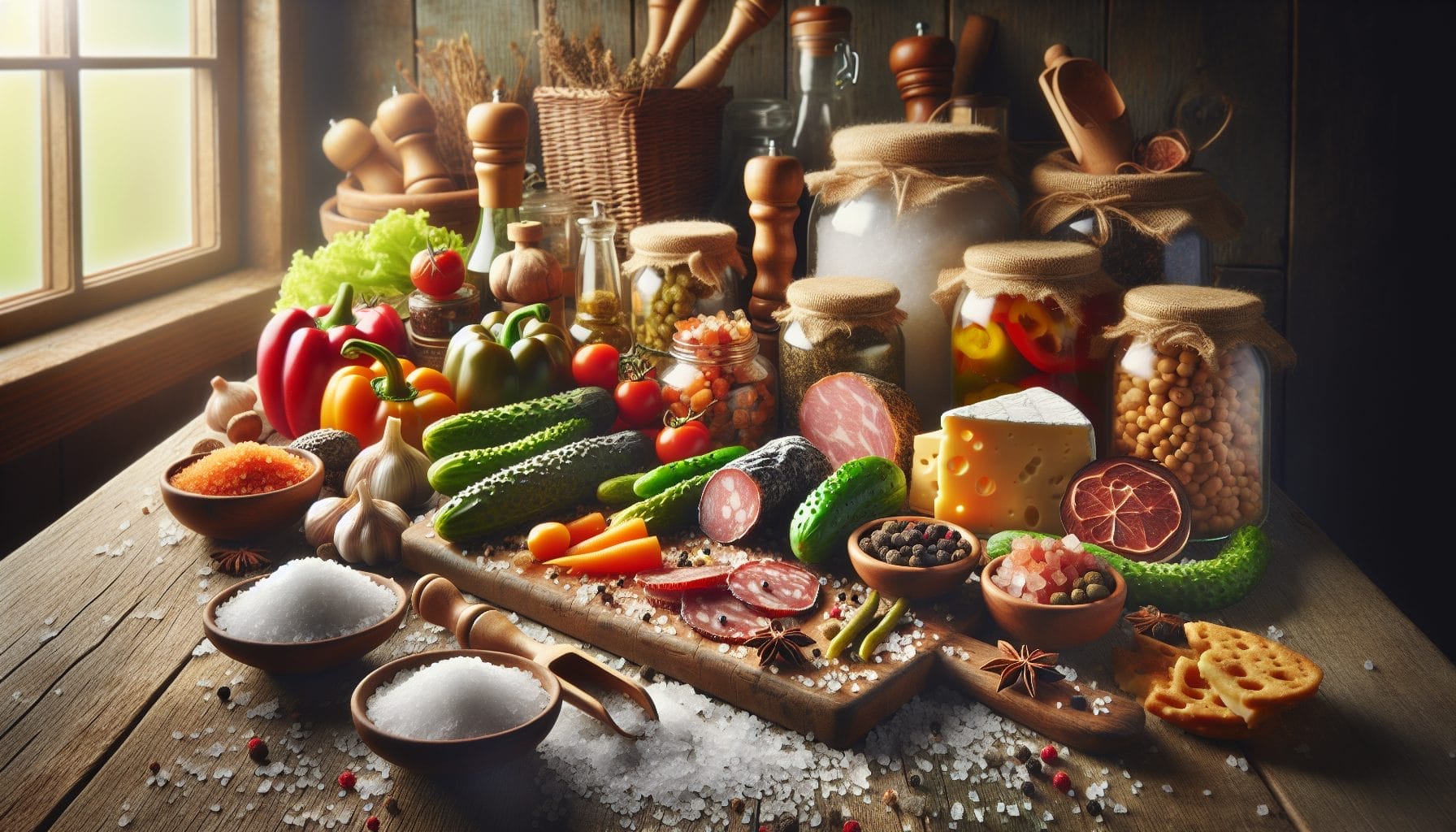
Quick Answer: Salt preserves food by drawing water out of harmful microorganisms through osmosis, creating an environment where they cannot survive or multiply. This simple mineral effectively dehydrates bacteria and other spoilage-causing microbes while also disrupting their cellular functions, allowing foods to remain safe and edible for extended periods.
The Science of Salt Preservation
That little white crystal on your dinner table is more powerful than you might think! Salt has been humanity’s food preservation ally for thousands of years, but how exactly does it work its magic?
At its core, salt preservation relies on a fascinating scientific principle called osmosis. When salt (sodium chloride) is applied to food, it creates what scientists call a “hypertonic environment” outside microbial cells. In simpler terms, this means:
- Water molecules naturally move from areas with less salt to areas with more salt
- When microbes encounter a salty environment, water rushes out of their cells
- This cellular dehydration essentially mummifies the microorganisms
Salt is also hygroscopic, which means it naturally attracts and holds water molecules. When you salt foods like meat or vegetables, the salt pulls moisture not just from microbes but from the food itself, creating a drier environment that’s doubly hostile to bacteria and other spoilage organisms.
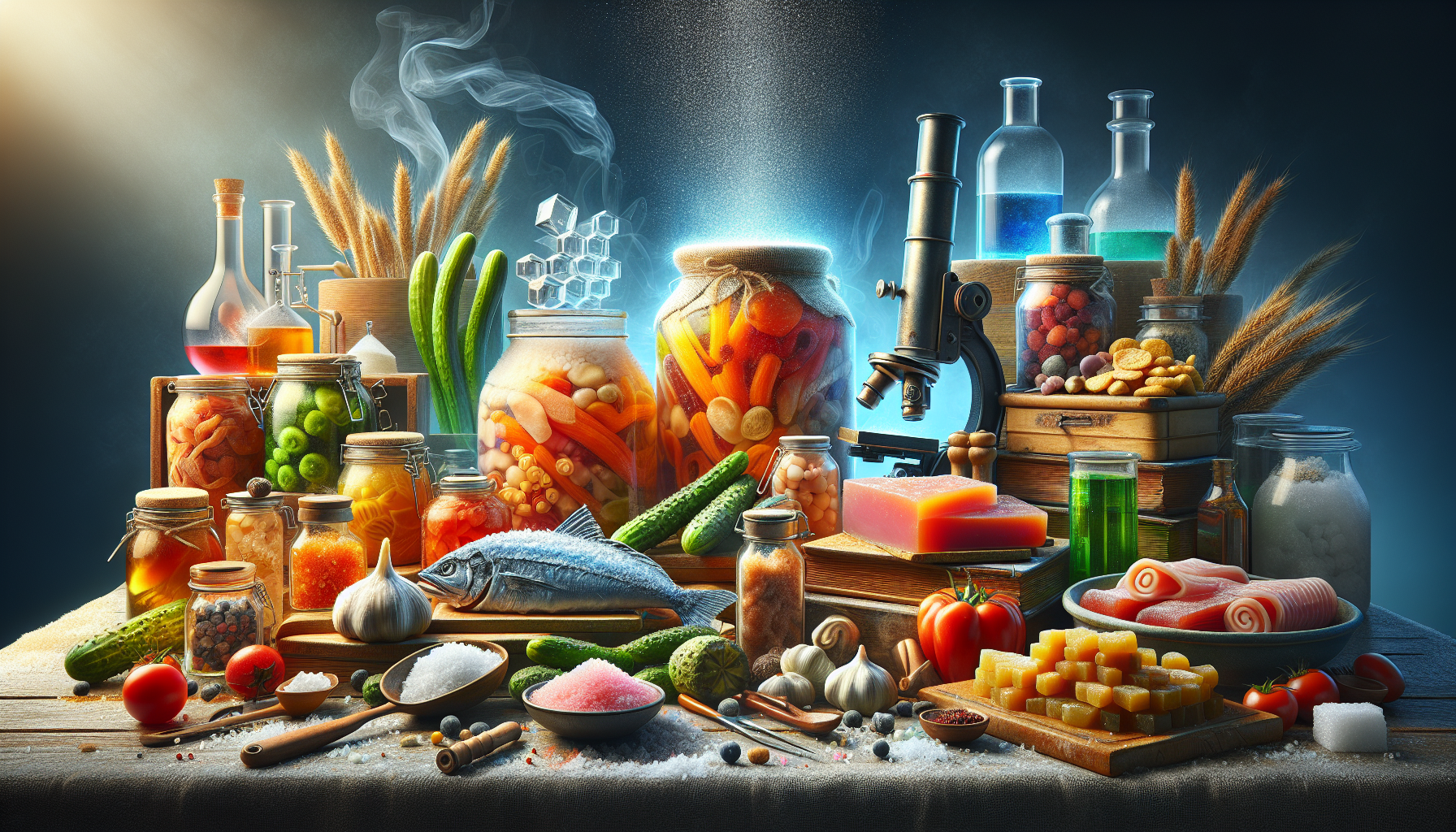
Think of salt as a microscopic sponge that soaks up water wherever it goes. Without sufficient water, harmful microorganisms simply can’t function—they can’t reproduce, can’t metabolize food, and ultimately can’t survive.
Salt’s Role in Microbial Control
When food scientists discuss preservation, they often refer to something called “water activity” or “aw” for short. This measures how much water is available in food for microorganisms to use. Fresh foods typically have water activity levels around 0.99 (very high), making them perfect breeding grounds for bacteria.
Salt preservation works by reducing this water activity to levels where most harmful bacteria simply can’t function—typically below 0.91. At these levels:
- Common pathogens like Salmonella and E. coli cannot multiply
- Spoilage organisms that cause food to rot are inhibited
- Food remains safe and stable for longer periods
But salt doesn’t just dehydrate microbes—it’s actually a multipronged attack on their survival. High salt concentrations also:
- Disrupt essential microbial enzymes
- Interfere with DNA replication
- Make it energetically costly for microbes to maintain their cellular functions
Interestingly, not all microorganisms are equally affected by salt. Some bacteria called halophiles (literally “salt-loving”) have adapted to tolerate high salt environments. Fortunately, most of these salt-tolerant microbes aren’t harmful to humans, and many are actually beneficial in food preservation processes.
Fermentation and Salt: A Symbiotic Relationship
One of the most fascinating aspects of salt preservation is how it can selectively inhibit harmful bacteria while allowing beneficial ones to flourish. This selective process is the foundation of fermentation—one of humanity’s oldest and most valuable food preservation methods.
In fermentation, salt acts as a microbial gatekeeper, creating conditions where:
- Harmful, putrefying bacteria are inhibited
- Beneficial lactic acid bacteria (LAB) can thrive
- These good bacteria produce acids that further preserve the food
This process creates a beautiful chain reaction: salt inhibits the bad microbes, good microbes produce acids, and these acids lower the pH, creating an even more hostile environment for spoilage organisms while developing complex, tangy flavors we’ve come to love.
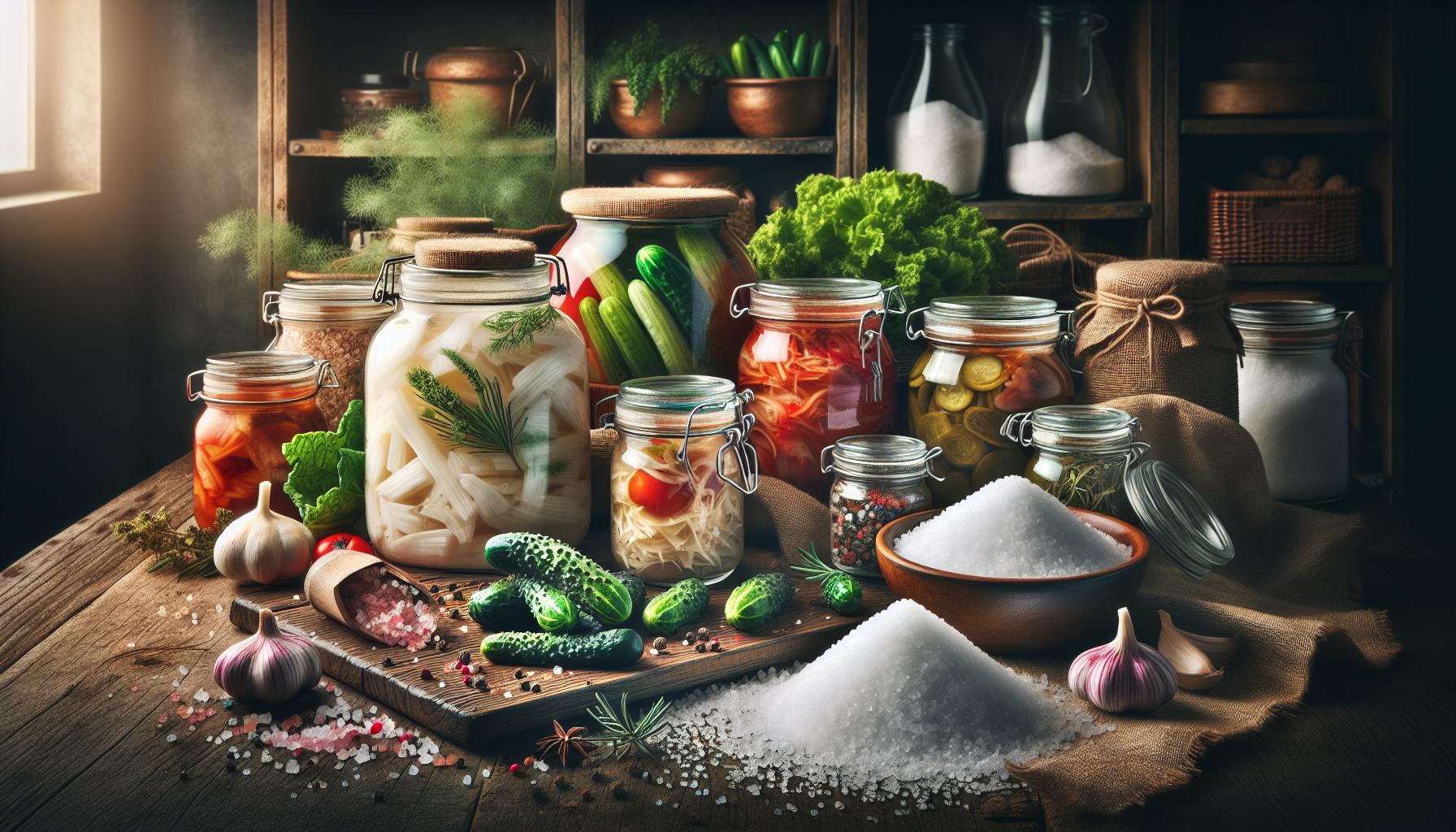
Some perfect examples of this salt-facilitated fermentation include:
- Sauerkraut: Shredded cabbage preserved with salt
- Kimchi: Korean fermented vegetables with salt and spices
- Pickles: Cucumbers transformed through salt brining
- Cured sausages: Meats preserved through salt and beneficial bacterial action
The salt concentration in these foods must be carefully controlled—too little won’t prevent spoilage, but too much will inhibit even the beneficial bacteria. This delicate balance is why fermentation was considered an art form long before science could explain the processes involved.
Historical and Modern Applications of Salt Preservation
Salt preservation is one of humanity’s oldest food technologies, dating back to prehistoric times. Before refrigeration, salt was literally worth its weight in gold because of its ability to keep food edible through long winters or extended journeys.
Historical applications of salt preservation include:
- Salt-cured hams and bacon in European traditions
- Salt cod (known as bacalao or baccalà), which helped fuel global exploration
- Salt-preserved vegetables that provided vital nutrients through winter months
- Salt-cured olives and cheeses across Mediterranean cultures
These preservation methods weren’t just about survival—they created entirely new culinary traditions and flavors that we still cherish today. Many of our most beloved foods exist because of salt preservation techniques developed centuries ago.

In modern times, with refrigeration widely available, you might think salt preservation has become obsolete. However, salt remains vital in food preservation through:
- Processed foods where salt extends shelf life while enhancing flavor
- Artisanal cured meats and cheeses that rely on traditional methods
- Home fermentation, which has seen a resurgence in popularity
- Combined preservation systems where salt works alongside refrigeration and other methods
Modern food preservation often uses multiple techniques together—what food scientists call “hurdle technology”—where salt might be just one of several preservation methods employed to keep food safe and flavorful.
Conclusion: The Timeless Power of Salt
From ancient preservation techniques to modern food science, salt remains one of our most valuable allies in keeping food safe, flavorful, and accessible. Its ability to control microbial growth through osmosis and water activity reduction makes it a truly remarkable substance—one that has shaped human civilization and culinary traditions across the globe.

Whether you’re enjoying traditional salt-cured delicacies or simply noticing sodium content on a nutrition label, you’re experiencing the continued relevance of one of humanity’s oldest food technologies. So next time you sprinkle a bit of salt on your meal, remember—you’re wielding an ancient power that has preserved food and enhanced flavor for thousands of years.