
The ordinary world is astonishing.
Follow the evidence behind everyday mysteries—from ice crystals and immune cells to static sparks and distant stars.

Mechanism first.
Jargon translated.
Start with what’s new



Explore by field
Biology and Health
Bodies, brains, plants, animals, and the living systems that keep adapting.
111 questions →02Physics and Electricity
Forces, motion, waves, energy, electricity, and the rules beneath everyday technology.
68 questions →03Chemistry and Materials
Atoms at work in food, water, metals, fabrics, and the materials all around us.
61 questions →04Environmental Science
Weather, water, climate, geology, and the connected systems of a changing planet.
15 questions →05Astronomy and Space
Orbits, stars, planets, and the vast physical story beyond Earth’s atmosphere.
1 questions →Questions that change how you see things

The Science of Why We Cry
Tears protect eyes and express emotion. The facial nerve supplies tear secretion; stress relief is uncertain and hormone removal is not established.
5 min read →
How Does Heat Affect Metal?
Discover how heat transforms metal through thermal expansion, strength changes, and atomic rearrangements. Learn about heat treatment processes and practical applications in this…
7 min read →
The Physics of Snowboarding
Discover the exhilarating physics behind snowboarding, from gravity's pull to angular momentum in aerial tricks. Learn how scientific principles can improve your performance on the…
5 min read →
How Does Breathing Affect Anxiety?
Breathing and anxiety are linked. Research explores that relationship, but study results do not establish a universal technique or replacement for care.
4 min read →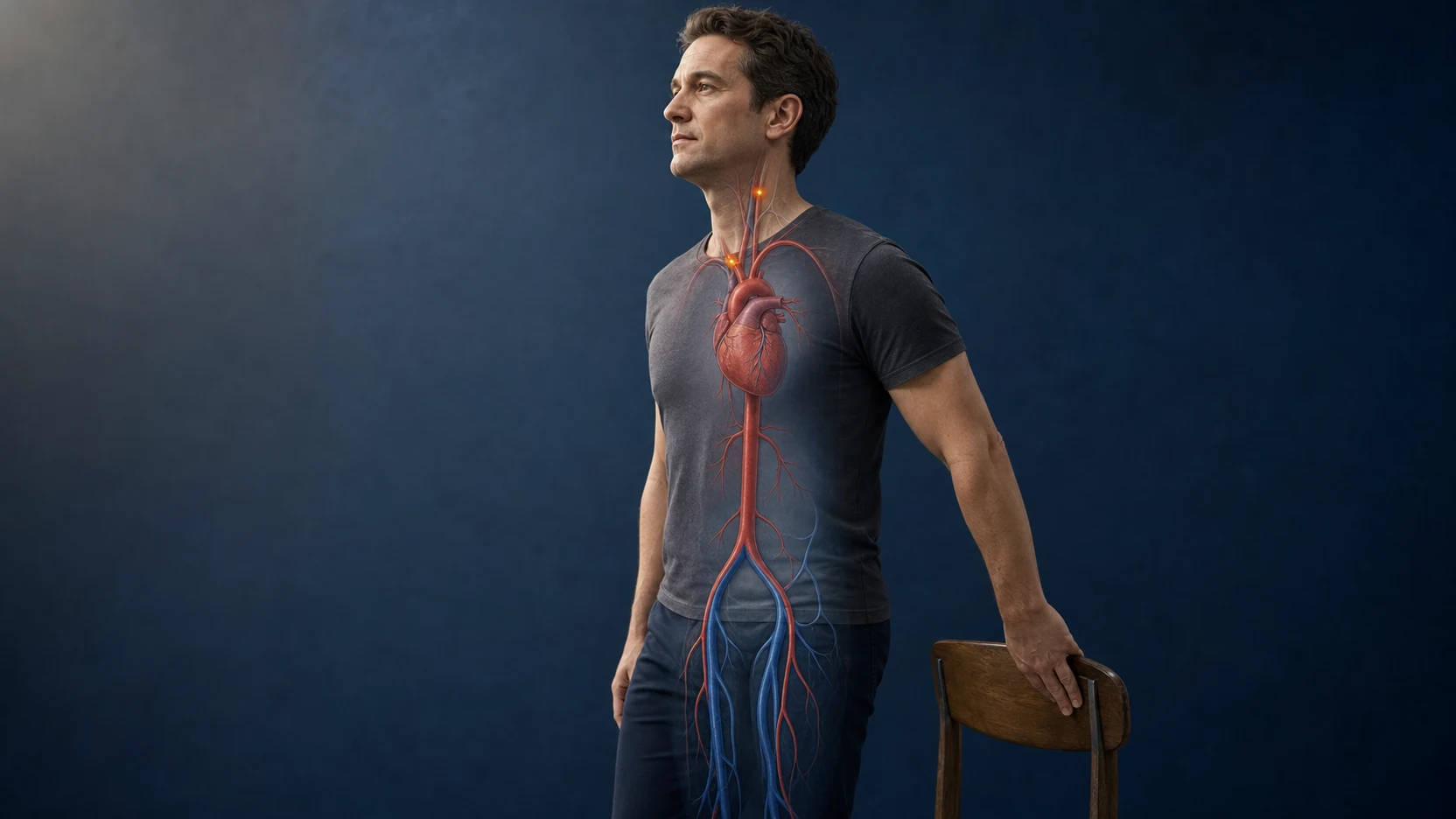
Why Do We Get Dizzy When Standing Up?
A blood-pressure drop can cause lightheadedness after standing. Dizziness alone does not establish the cause; some warning signs need emergency care.
4 min read →