
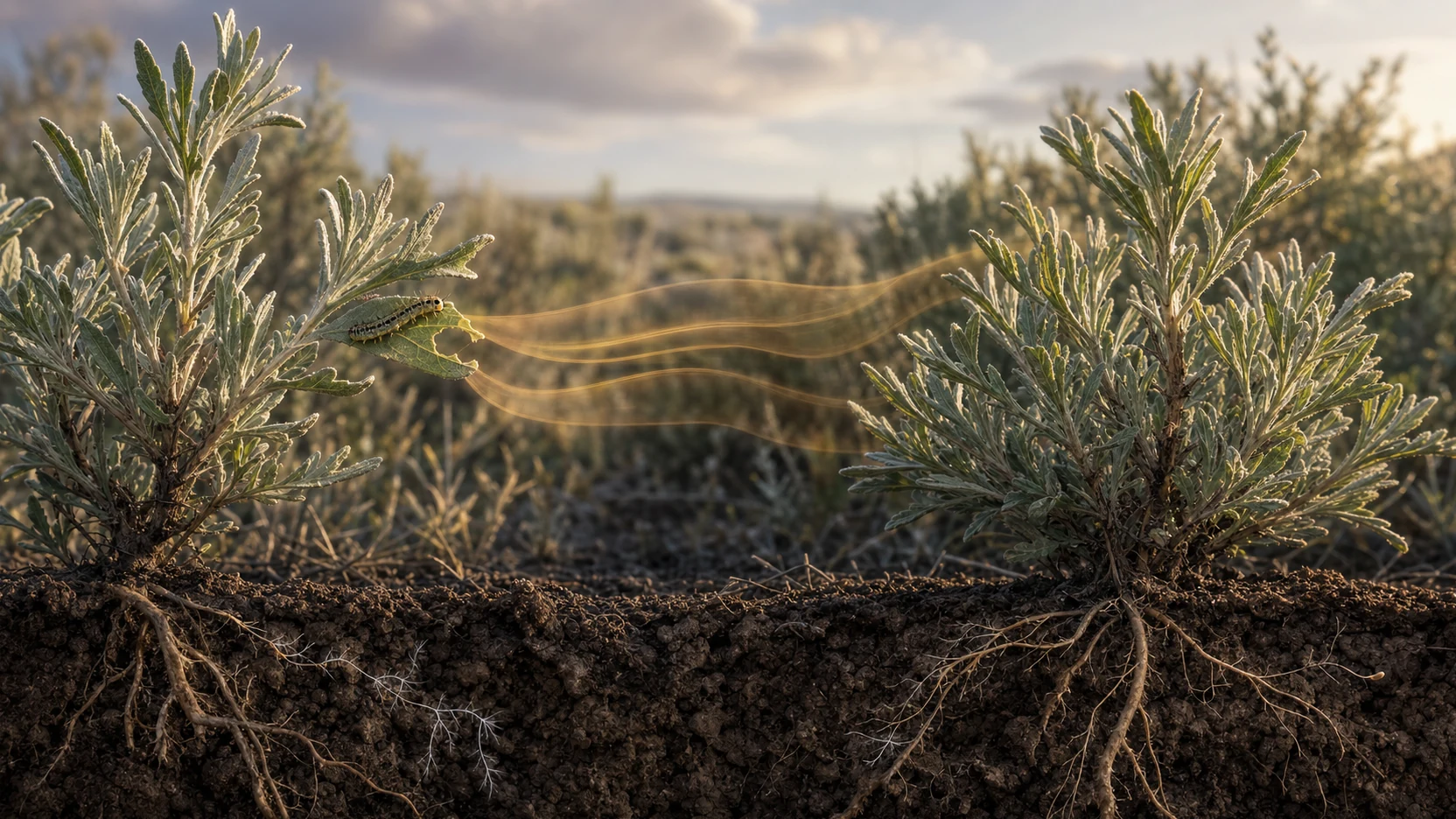
Quick Answer:Plants respond to chemical compounds, light and other environmental cues. Some compounds released by one plant alter a neighbor's defenses, and some serve as signals within a plant. Beneficial sharing through forest fungal networks and plant-to-plant acoustic messages require more evidence; a response does not imply conscious conversation.
Introduction - The Secret Language of Plants
We've all marveled at forests, gardens, and meadows, but what if I told you that beneath the serene surface lies a bustling communication network? Plants, far from being passive organisms, are constantly "talking" to each other through an intricate language of chemicals, root connections, and perhaps even sound vibrations.

This hidden conversation happens all around us, yet remains largely invisible to human perception. Plants share warnings about insect attacks, alert neighbors to drought conditions, and even recognize their relatives—all without a single word spoken.
In this article, we'll journey into this fascinating world of plant communication, exploring how our leafy companions have developed sophisticated ways to share information that ensure their survival and prosperity in a challenging world.
Airborne Signals - The Role of VOCs
Imagine you're being attacked. What would you do? Scream for help? Plants do something similar, but with chemicals instead of sound.
What Are VOCs?
The primary language of plants consists ofvolatile organic compounds (VOCs)—airborne chemical messengers that act as a sophisticated communication system. These compounds, often terpenoids and sesquiterpenes, float through the air carrying vital information from plant to plant.
When a plant is damaged by insects or disease, it releases a specific cocktail of VOCs that serve as warning signals to neighboring plants. This chemical SOS alert enables the receiving plants to prepare their defenses before they're attacked.

The Chemical Warning System
This airborne signaling system works with remarkable precision:
- When a plant is damaged, it immediately begins producing and releasing specific VOCs
- These chemical compounds drift through the air to nearby plants
- Receiving plants detect these signals and respond by activating their own defense systems
- Plants may produce anti-insect toxins or anti-fungal compounds in response
For example,research on sagebrushshows that when damaged, these plants release VOCs that enhance resistance in nearby plants. Interestingly, plants from the same population respond more effectively to these signals than those from distant populations, suggesting plants recognize their "neighbors" better than strangers.
The Complexity of Chemical Language
Plant communication isn't just a simple "danger" alert. The specific ratios and mixtures of VOCs convey detailed information about the type of threat, its severity, and even instructions for appropriate responses. In this way, plants have developed a chemical vocabulary with remarkable complexity and specificity.
Purdue's petunia studyinvestigated volatile signaling within developing flowers. It connected germacrene-D and a KAI2-mediated pathway with reproductive development. It did not demonstrate a universal vocabulary of inter-plant warnings.
Underground Networks - The 'Wood Wide Web'
While airborne signals represent one communication channel, plants have developed another, more direct network beneath our feet—a living internet of roots and fungi often called the "wood wide web."
Mycorrhizal Networks: Nature's Internet
Beneath the forest floor lies an astonishing communication infrastructure. Plantsexchange signals undergroundthrough:
- Root exudates: Chemical compounds released directly from roots
- Mycorrhizal networks: Vast webs of fungal threads that connect multiple plants
Roots and soil microbes can exchange compounds, and fungal hyphae can connect plant roots. Whether those connections transmit a particular warning, move resources or benefit a neighboring plant requires separate experimental evidence; the presence of a connection does not establish a forest-wide support system.
Root-to-Root Communications
Research has shownthat VOCs can travel through soil to stimulate defense mechanisms in the roots of neighboring plants. This allows for warnings about threats like harmful fungi or bacteria that specifically target root systems.
Even more fascinating, plants under drought stress can signal their neighbors both within their own species and across different species, with the strength of these signals varying depending on plant identity and position. This creates a modular yet coordinated response system that spans from individual roots to entire plant communities.
Resource Sharing and Support
Materials can move between plants in some experimental systems, but transfer alone does not establish intentional support or a benefit in a natural forest. A2023 review by Karst, Jones and Hoeksemafound that common claims about forest mycorrhizal networks exceeded the available evidence. Root responses, resource movement and fungal mediation must be tested separately.
Detection Mechanisms - How Plants Perceive Signals
For communication to be effective, plants need ways to detect and interpret the signals they receive. But how exactly do plants "hear" these chemical messages?
Specialized Receptors
The UC Davis and Purdue experimentidentified a KAI2-dependent pathway important for sensing the terpene germacrene-D in developing petunia flowers. It concerns a particular compound and developmental response, not proof that every plant detects all neighboring VOCs this way.
Different receptor variants can have different biochemical responses. The petunia result identifies one pathway; many mechanisms by which plants perceive neighboring volatiles remain unresolved.

From Reception to Response
When a plant detects a warning signal, a cascade of internal events unfolds:
- A compound must interact with a pathway capable of detecting it; that mechanism depends on the compound and plant.
- This binding triggers changes in the receptor's shape
- The shape change activates signaling pathways within the cell
- These pathways influence gene expression
- New proteins are produced to help the plant respond appropriately
Studies on petuniashave shown that these karrikin-like pathways influence everything from genetic architecture to stigma development and seed production. Without functional receptors, plants show stunted reproductive capabilities—highlighting how crucial these communication systems are to plant survival.
Integrating the Response
The detection of external signals doesn't just create localized responses. Plants integrate these signals across their entire structure through:
- Bioelectrical signals that travel through plant tissues
- Hormonal changes that affect multiple plant systems
- Systemic changes that coordinate responses between different plant parts
Local responses can connect with hormonal and electrical changes elsewhere in a plant. The outcome depends on the pathway and conditions; responsiveness is not a guarantee of the most effective defense.
Beyond Chemicals - Sound and Light Communication
While chemical communication represents the most well-documented form of plant "language," emerging research suggests plants may be using other channels as well.
Can Plants "Hear"?
It sounds like science fiction, butresearch indicatesthat plants may use sound vibrations as another form of communication. Studies have shown that specific sound frequencies can alter gene expression in plants and even increase yields in some cases.
These acoustic signals could potentially relay information about stress or environmental conditions, though this area of research remains somewhat controversial.Scientific debate continuesabout the extent and significance of plant acoustic communication.

Light as a Communication Channel
Plants are exquisitely sensitive to changes in light quality and quantity. They detect:
- Changes in light caused by neighboring plants' shadows
- Alterations in light spectrum filtered through other plants' leaves
- Day length and seasonal light changes
These light signals provide important information about their environment and the presence of neighbors, allowing plants to adjust their growth patterns accordingly.
A Multisensory Approach
Rather than relying on a single communication channel, plants integrate information from multiple sources—chemical signals, root connections, mechanical cues, light quality, and potentially sound vibrations—to create a comprehensive picture of their environment.
This multifaceted approach to communication allows plants to respond with remarkable precision to the complex challenges they face in their environment.
Conclusion - The Symphony of Survival
The world of plant communication reveals a hidden complexity beneath the seemingly silent green landscape around us. Through airborne chemicals, underground networks, specialized receptors, and possibly even sound vibrations, plants maintain a constant dialogue that helps them thrive in challenging environments.
Plant responses to chemical cues and changes in light can be tested without assuming a human-like dialogue. Claims about helpful resource sharing through forest fungal networks and about plant-to-plant acoustic messages remain more uncertain than those established responses.
Next time you walk through a forest or garden, remember you're surrounded by countless conversations you can't hear—a reminder that the natural world is far more intricate and interconnected than it first appears. The plants may be whispering, but their conversation shapes the world we live in.
Sources & further reading
- volatile organic compounds (VOCs)
- Purdue's petunia study
- Research has shown
- 2023 review by Karst, Jones and Hoeksema
- The UC Davis and Purdue experiment
- Scientific debate continues
That’s the mechanism. The wonder is still allowed.