Quick Answer:An internal combustion engine burns fuel inside a chamber to create high-pressure gases that push pistons, turning a crankshaft and ultimately powering a vehicle. Most car engines use a four-stroke cycle — intake, compression, power, exhaust — to keep the process running smoothly. Both gasoline and diesel engines follow this principle but differ in how they ignite the fuel.
Engine Essentials Unveiled
Aninternal combustion engine(ICE) is essentially a compact power plant. Fuel burns inside acombustion chamber, creating hot, expanding gases that do mechanical work. Unlike external combustion engines (such as steam engines), all the action in an ICE happens right inside its own cylinders.
Here’s why it’s so clever:
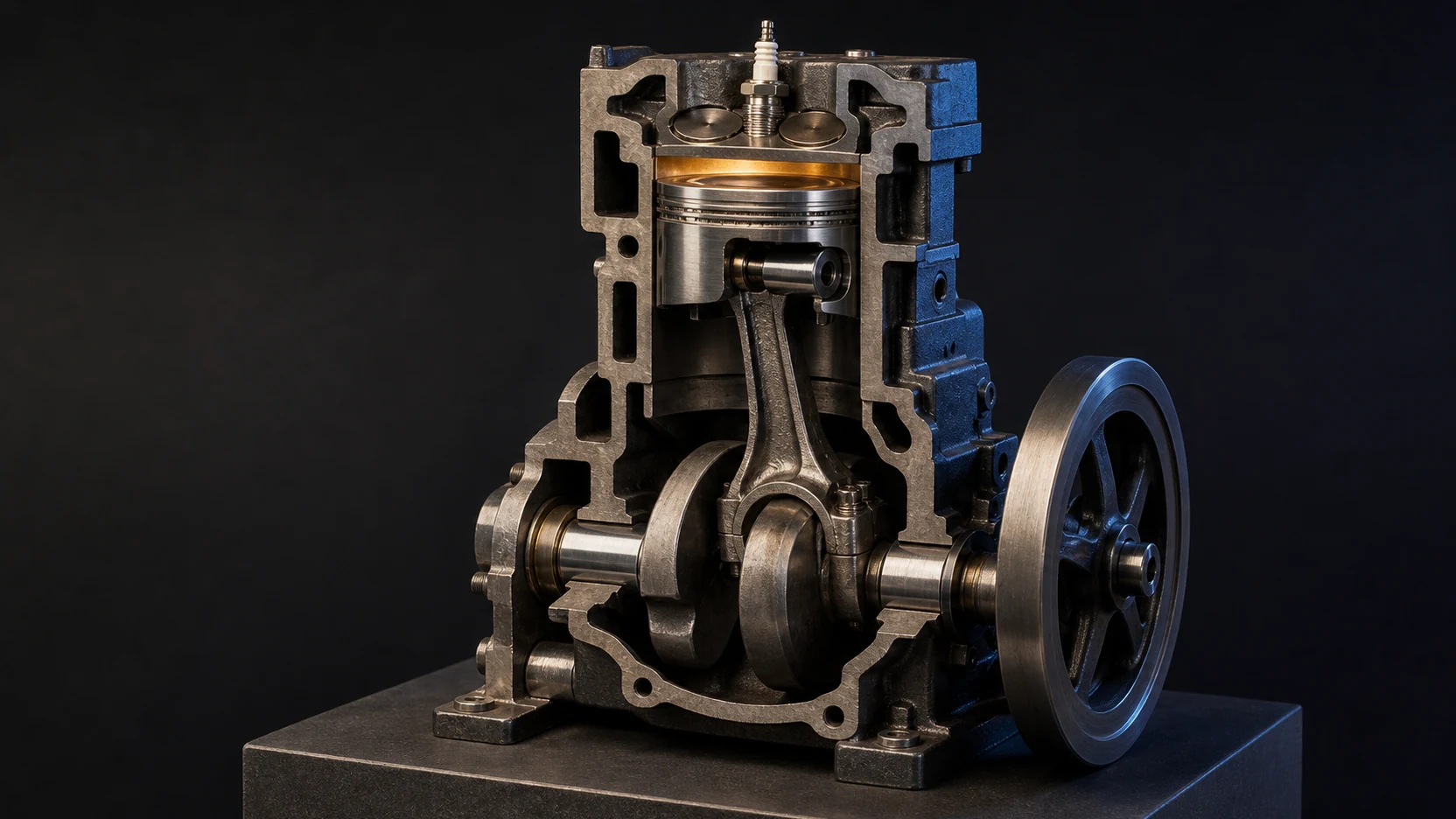
- Thepistonmoves up and down inside the cylinder, compressing and expanding space.
- Aconnecting rodlinks each piston to thecrankshaft, turning straight-line movement into rotation.
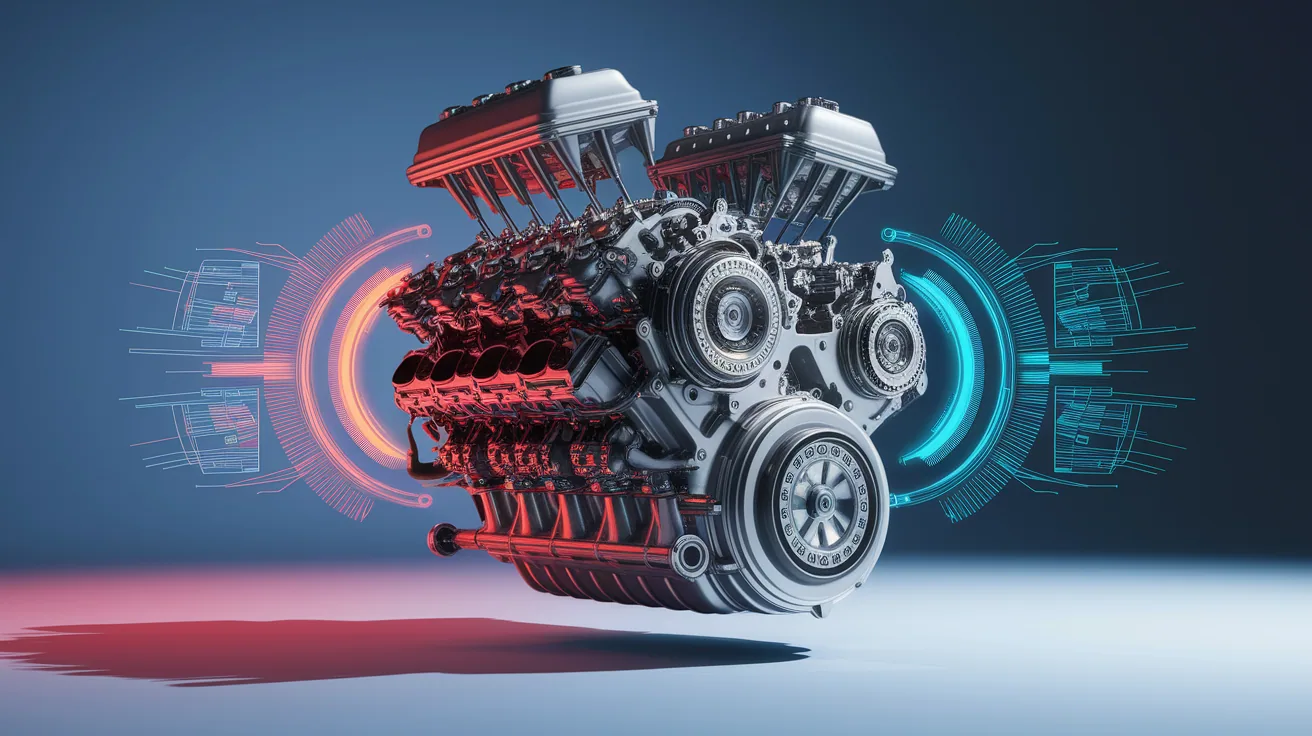
- Valves, guided by acamshaft, open and close at precise moments to let in the air-fuel mixture and push out exhaust gases.
- Ignition systems — whether viaspark plugsin gasoline engines or heat from compression in diesels — set the combustion process in motion.
Because this all happens in rapid, repeating strokes, the result is continuous, smooth power output.
The Four-Stroke Power Cycle
Most modern engines use thefour-stroke cycle. Think of it like a repeating four-step dance:
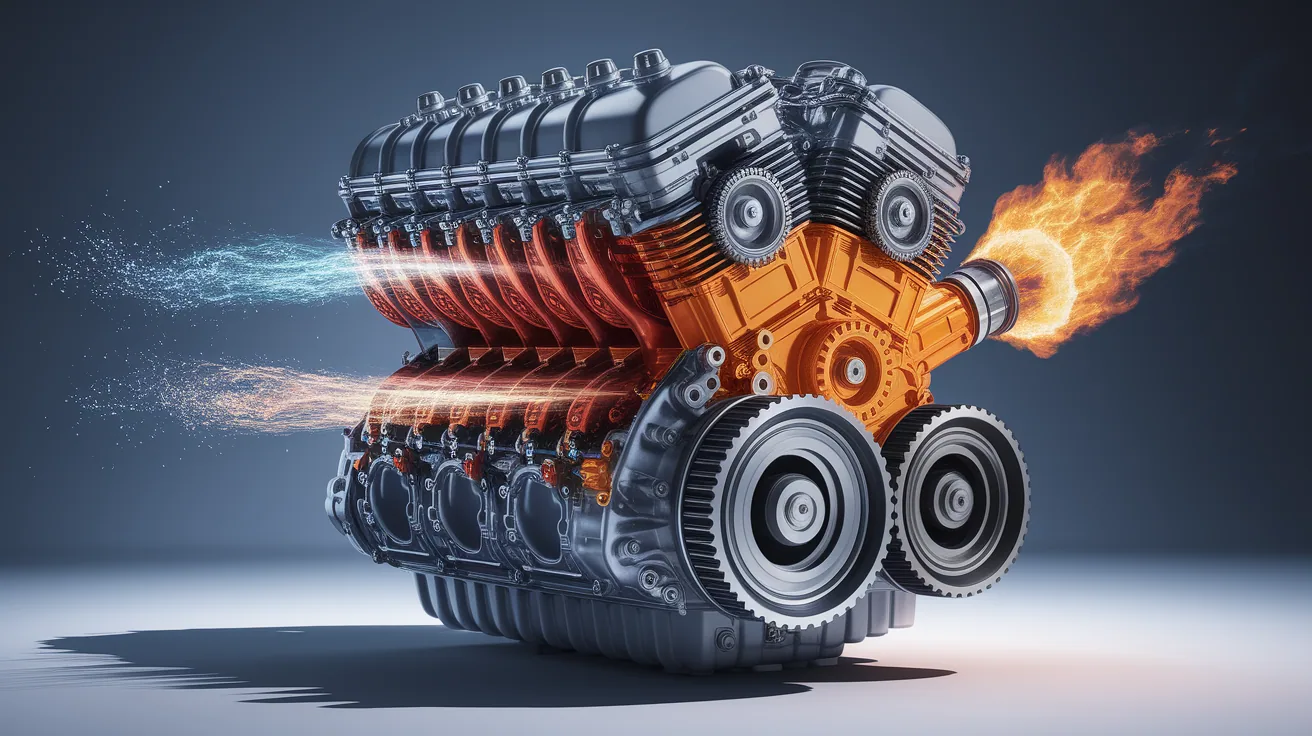
- Intake stroke:The piston moves down, theintake valveopens, and a fuel-air mixture flows into the combustion chamber.
- Compression stroke:Both valves close, the piston moves up, squeezing the mixture to raise its pressure and temperature.
- Power stroke:At the top, aspark plug(in SI engines) ignites the mixture, causing a burst of high-pressure gas that pushes the piston down with force.
- Exhaust stroke:The exhaust valve opens, the piston rises again, pushing out spent gases through the exhaust system.
This entire process takestwo full turns of the crankshaftfor each full cycle, delivering steady power to the wheels via the transmission.
Core Components Driving the Process
Every part of the engine plays a special role in turning explosions into movement. Here’s a breakdown of important pieces, based onillustrated engine diagrams and videos:
- Engine block:The sturdy home for the cylinders.
- Piston:Moves up and down within the cylinder chamber.
- Connecting rod:Transfers piston motion to the crankshaft.
- Crankshaft:Converts reciprocating piston motion into rotational power.
- Camshaft:Controls when valves open and close.
- Valves:Intake valves let the mixture in; exhaust valves let gases out.
- Spark plug:Ignites the air-fuel mix in gasoline engines.
- Fuel injection system:Delivers precise amounts of fuel for combustion.
- Cooling system:Prevents overheating using coolant channels within the engine block.
Spark vs Compression Ignition Engines
Internal combustion engines come in different types, but the big divide is betweenspark ignition(SI) and compression ignition (CI) designs:
- Gasoline (Spark Ignition) Engines:Use aspark plugto ignite a pre-mixed fuel-air charge. Common in most cars due to smooth operation and high RPM capability.
- Diesel (Compression Ignition) Engines:Compress only air until it’s hot enough, then inject diesel fuel directly into the cylinder for spontaneous ignition. Favored for trucks and heavy-duty machines because of strong torque and efficiency.
The difference lies in how the combustion starts, which affects power, efficiency, and even the sound of the engine.
From Heat to Motion: The Thermodynamic Cycle
At its heart, an ICE is a heat engine using thermodynamics to turn thermal energy into work. Gasoline units mainly follow theOtto cycle, and diesels use theDiesel cycle.
Here’s what that means in plain terms:
- Otto cycle:Heat is added while the piston is fixed at the top, then expanding gases push it down.
- Diesel cycle:Heat is added while the piston is moving down during expansion, maintaining constant pressure for part of the stroke.
Efficiency in both depends on factors likecompression ratio, fuel quality, and minimizing heat loss. Innovations such as turbocharging, directfuel injection, and variable valve timing help engines produce more power from less fuel.
Revving Ahead: Wrapping Up
The internal combustion engine is a marvel of moving parts and timed explosions, converting chemical energy into the kinetic energy that powers our vehicles. Whether a gasoline engine firing from a spark plug or a diesel relying on high compression, the principle is the same: control the combustion process so precisely that it delivers smooth, reliable motion. With ongoing improvements in engine performance, cooling systems, and fuel delivery, the ICE continues to play a central role in how we get from one place to another.
Sources & further reading
That’s the mechanism. The wonder is still allowed.