Quick Answer:Visual cues — especially color, but also shape and presentation — measurably change how food tastes. The brain integrates what the eyes report with signals from the taste buds, so a strawberry-colored drink tastes sweeter than the identical clear one, and the same food can taste different depending on its color, shape, and surroundings.
Eating with your eyes first
Flavor is built in the brain from many streams of information: taste buds send basic tastes (sweet, sour, salty, bitter, umami), while smell, texture, temperature, and vision contribute simultaneously. Vision runs ahead of the others — the brain forms an expectation of what something will taste like before it reaches your mouth, and that expectation shapes the experience. This cross-modal integration is why food companies and restaurants invest so much in appearance: it genuinely changes the perceived flavor.
Color–taste associations
People reliably associate colors with tastes, and the associations track real-world experience:
- Red and pink— sweetness (strawberries, watermelon, cherry candy)
- Green and yellow— sourness or tartness (lemons, limes, green apples)
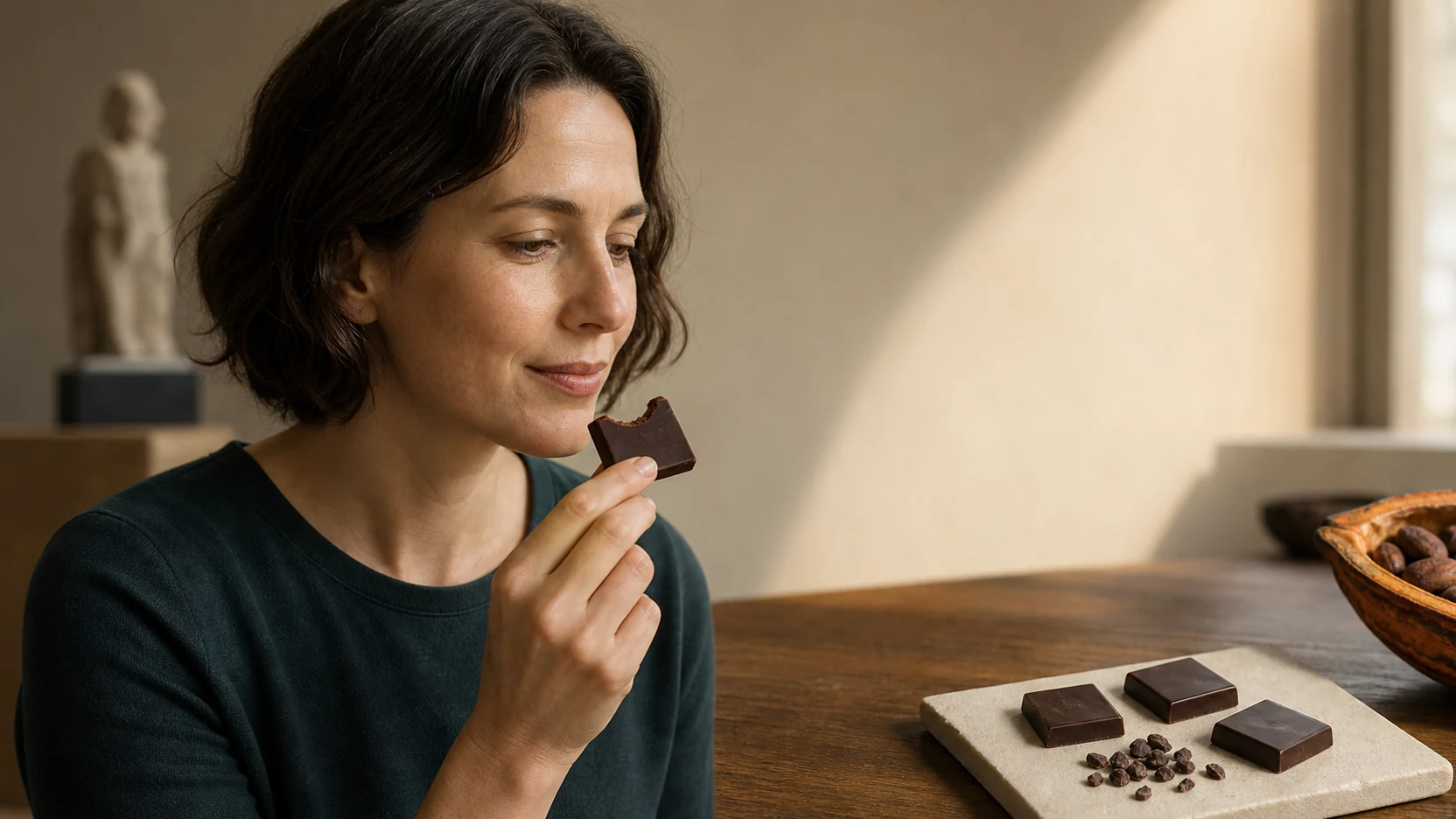
- Brown and black— bitterness or richness (coffee, dark chocolate)
- White and pale colors— mildness or saltiness
These links are learned from the foods we grow up with, but they are strong and consistent enough that a food's color can override its actual flavor: studies repeatedly find that people misidentify flavors when a drink's color contradicts them — for example, labeling a cherry-flavored drink as orange when it is colored orange.
Hue and saturation matter, not just color
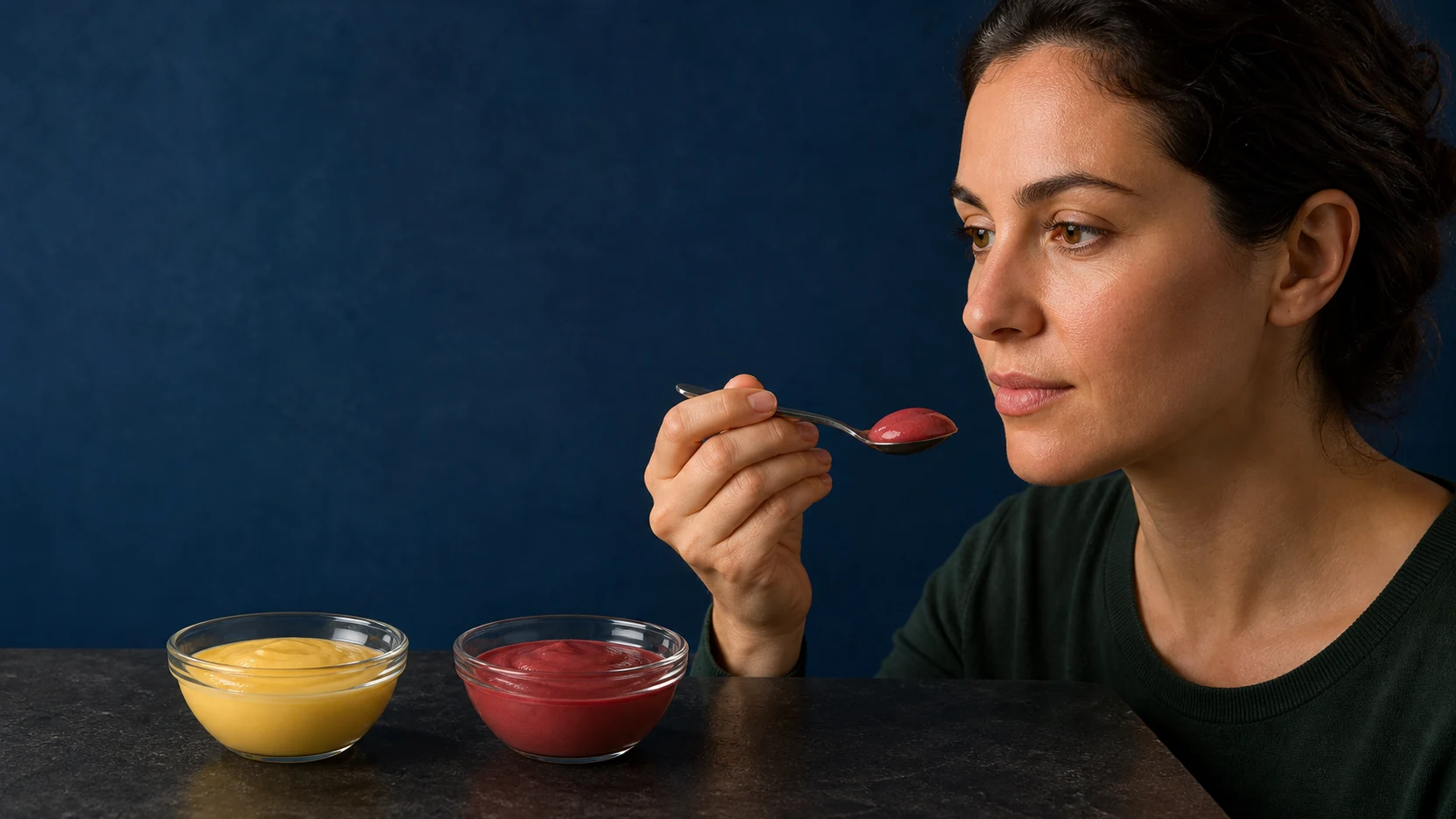
It is not only which color a food is, but how intense it is. More saturated, vivid colors generally produce expectations of stronger flavor: a deeply colored raspberry sorbet is expected — and experienced — as more intensely flavored than a pale one. This effect has been demonstrated across many foods and drinks, and it is one reason artificially vivid colors can make products taste "stronger" even when the recipe is unchanged.
Shape, presentation, and context
Vision contributes beyond color. Food arranged neatly is rated as more enjoyable than the same food served messily; the weight and material of a plate or cup shift taste ratings (a heavier vessel can make food seem more substantial); and even the shape of a plate can influence perceived portion size and satisfaction. These effects fall undercross-modal perception— the study of how the senses shape one another — and they remain an active area of research.
Cultural and individual differences
Color–taste associations are learned, so they vary with culture. Green candy means apple or lime in many Western contexts but matcha or green tea in Japan; purple suggests grape in the US but taro or ube in parts of Southeast Asia. Individual experience matters too — someone who once became ill after a particular food may find its color aversive for years. The associations are robust, but they are not universal.
Why this happens: the psychology of expectation
The mechanism behind all of this is expectation-based processing. The visual system makes a rapid prediction about the food; the brain then interprets the taste signals in line with that prediction, and the two are bound together into a single flavor percept. When reality contradicts the expectation strongly enough, people can even experience flavor "illusions" — tasting flavors that are not chemically present.Research in the Journal of Consumer Researchdemonstrated the power of these color-driven expectations on actual taste judgments.
The bottom line
Taste is not confined to the tongue. Color, saturation, shape, and presentation set expectations that become part of the flavor itself — which is why the same recipe can taste different depending on how it looks, and why "we eat with our eyes first" is a literal description of the brain's wiring.
Sources & further reading
That’s the mechanism. The wonder is still allowed.