Quick Answer:Cold water immersion may reduce muscle soreness and the feeling of fatigue in the hours after exercise, and some people find it mentally invigorating. Evidence that it speeds up muscle repair, restores performance, or builds muscle is mixed — and in one direction, regular post-workout cold exposure may actually blunt strength-training adaptations. The cold itself also carries real safety risks, so the practice deserves caution, not hype.
What cold water immersion actually changes
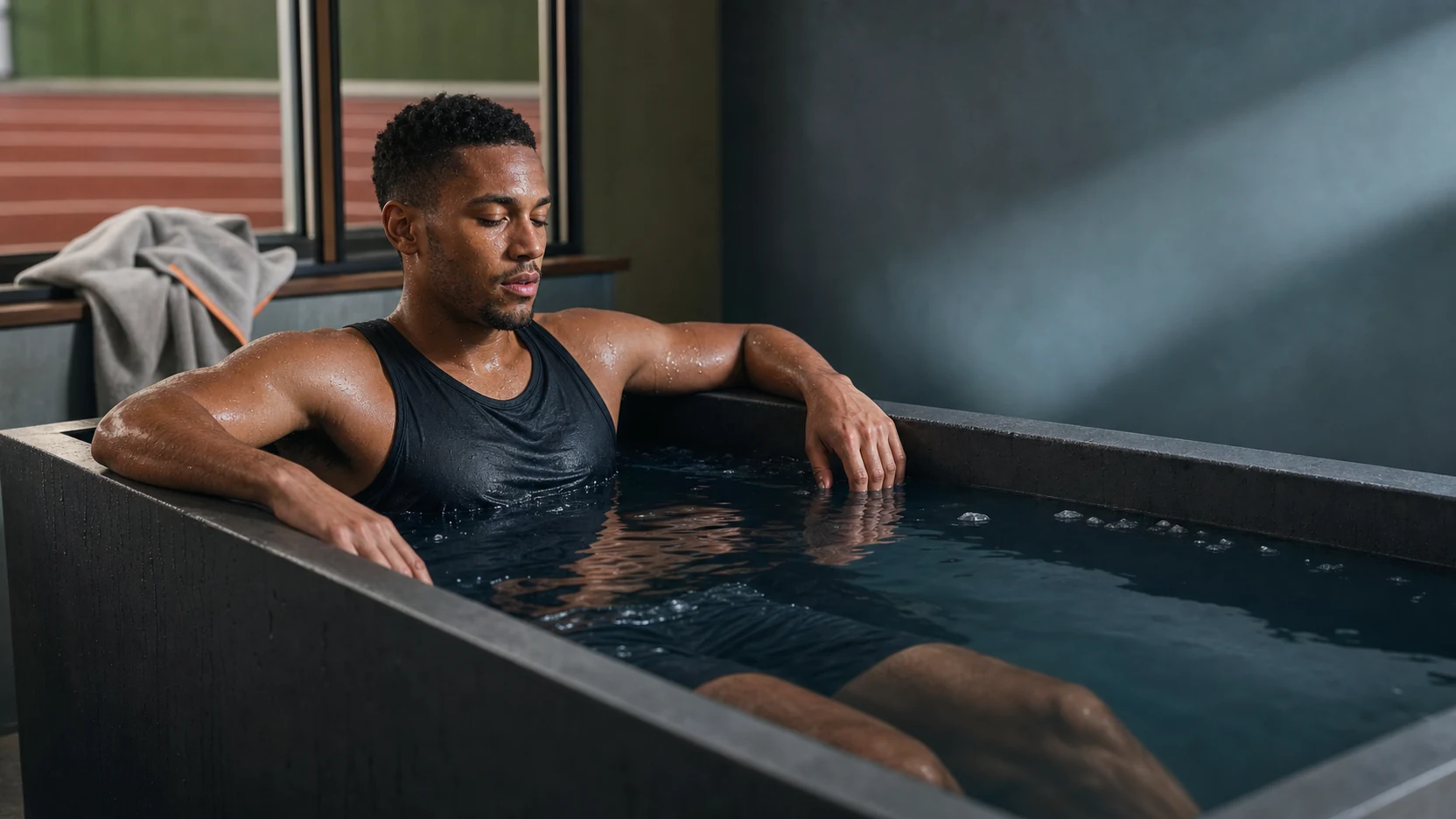
When you immerse in cold water (roughly 10–15°C / 50–59°F, the range used in most studies), your body reacts immediately. Blood vessels near the skin narrow, redirecting blood toward the core; heart rate rises; breathing quickens; and stress hormones such as norepinephrine increase. A2023 review of the physiology of cold water immersiondescribes these as brief, repeatable stress responses rather than a simple "on switch" for healing.
Dramatic-sounding numbers circulate about this response — for example, reports that norepinephrine rises by up to 530% or dopamine by up to 250%. Those figures come from a small number of studies of experienced cold-water swimmers, not from typical recreational users, and the studies were not designed to show that everyone gets those changes. The findings describe what happened in specific, small groups — they do not predict an individual response.
What the evidence supports: soreness and how recovery feels
The most consistent finding in the research is that cold water immersion reducesmuscle sorenessandperceivedfatigue in the day or two after intense exercise. Meta-analyses of controlled trials — including a2024 systematic review in PLOS ONE— report lower soreness ratings after cold water immersion compared with passive recovery, along with modest reductions in markers of muscle damage such as creatine kinase.
This effect is real but specific: it changes how recoveryfeels. Feeling less sore is not the same as healing faster, and the review literature is careful not to claim that cold water immersion accelerates tissue repair itself.
Where the evidence is mixed: performance and muscle growth
When researchers measure actual performance restoration — jump height, sprint times, or strength in the days after a hard session — the results are inconsistent. Somestudiesreport small improvements in measures like countermovement jump after cold water immersion, while others find no meaningful difference, and a few find that other approaches (such as hot water immersion) do at least as well for endurance-oriented recovery.
There is also a well-documented trade-off for people training to build muscle. A landmark2015 study in The Journal of Physiologyfound that applying cold water immediately after every strength session weakened the muscle-building response compared with training without it — the same anti-inflammatory effect that eases soreness may also dampen the inflammation signals that help muscles adapt and grow. Subsequent research has not overturned that finding, so people whose goal is hypertrophy may want to avoid routine post-workout cold plunges.
Inflammation: a time-dependent story
Cold water immersion is often described as an anti-inflammatory treatment, and it does appear to reduce some inflammatory markers in the hours and days after exercise. But the pattern is not simply "cold lowers inflammation." ThePLOS ONE reviewnotes that some markers can rise shortly after immersion before settling lower, and that effects depend on the timing, duration, and temperature used. As with muscle growth, a blanket anti-inflammatory effect is not automatically a benefit — inflammation is part of how the body repairs itself.
Mood, alertness, and the limits of the evidence
People who practice cold water immersion frequently report feeling alert, focused, and even euphoric afterward. There is some research support for acute mood improvements and for associations between regular cold swimming and better wellbeing — onephysiology reviewdiscusses reported effects on mood, sleep, and perceived energy. These are promising observations, but most are based on self-reported outcomes in specific groups (often experienced cold swimmers), and the studies do not establish that cold immersion treats depression, anxiety, or any medical condition.
Protocols used in research
Studies showing reduced soreness typically use:
- Temperature:about 10–15°C (50–59°F)
- Duration:roughly 10–15 minutes, often split into repeated exposures
- Timing:within an hour or two after exercise
These are research protocols, not prescriptions. Shorter and less frequent exposures may be safer for beginners, and no single protocol has been shown to be the best.
The bottom line
Cold water immersion is best described in careful terms: itmayreduce soreness and perceived fatigue after hard exercise, and itmayfeel mentally refreshing. It is not a proven way to speed up tissue healing, restore performance, or build muscle — and for strength gains it may work against you. Anyone considering regular cold plunges should weigh the cold-shock and hypothermia risks, start cautiously, and seek medical advice if they have heart or circulation conditions.
Sources & further reading
- 2023 review of the physiology of cold water immersion
- 2024 systematic review in PLOS ONE
- studies
- 2015 study in The Journal of Physiology
That’s the mechanism. The wonder is still allowed.