
Quick Answer:Tattoo ink stays in place because the needle deposits it deep enough to reach the dermis — the skin layer that does not shed — and because the ink particles are too large for the immune cells that try to remove them to carry away completely. The result is ink that persists for decades, gradually fading as particles are slowly cleared.
What happens when you get a tattoo
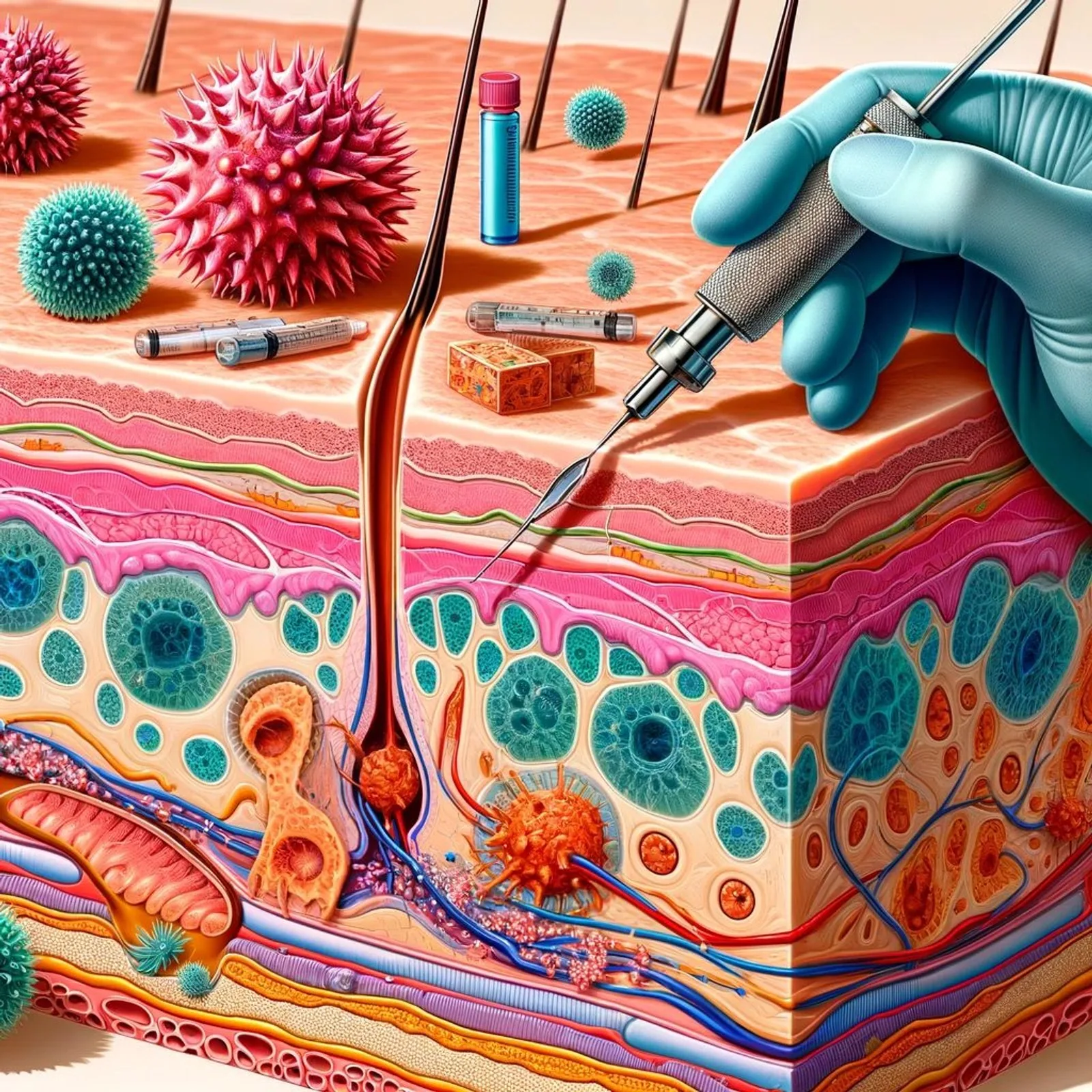
Getting a tattoo is like painting on skin, but the ink is placed deeper than a pen mark. A tattoo machine drives pigment through the epidermis — the top layer of skin, which constantly sheds — and into the dermis beneath it, where the ink stays. Because the dermis does not shed, the ink is not carried away the way a surface mark would be.
How the ink stays put
The body does not ignore the ink: it treats the pigment particles as foreign material and sends immune cells called macrophages to engulf and remove them. Research onmacrophage dynamics and tattoo persistencehas shown why the removal attempt fails: the pigment particles are too large for the macrophages to fully clear, and when an overloaded cell dies, the ink is released and taken up again by new macrophages. This continuous hand-off keeps the pigment in place, layer after layer of immune cells passing the ink along. Ink particles are also trapped in the dermis's network of collagen fibers, which anchors them in position.
Why tattoos don't fade quickly
Fading happens slowly because the same slow clearing process gradually removes a small amount of pigment. Ink particles are continuously carried away a little at a time, and exposure to sunlight accelerates the breakdown of pigment over years. The reason a tattoo looks nearly as sharp after a decade as it did after a month is that the dermal pigment reservoir is large and the removal rate is very small.
Can tattoos be removed?
Tattoos can be removed, but with difficulty. Laser removal works by targeting the pigment with intense light pulses, breaking larger particles into fragments small enough for the body's immune system to clear. Multiple sessions are needed because each treatment can only break down a fraction of the ink, and some pigments are much harder to remove than others. TheFDA's tattoo overviewcovers both the permanence of tattoos and the realities of removal.
Care and consideration
Because the ink is embedded in living tissue, tattoos are a medical-adjacent decision, not just a cosmetic one: needles break the skin, so sterile equipment and proper aftercare matter, and allergic reactions to some pigments do occur. TheFDArecommends checking for signs of infection and consulting a professional if you have concerns. Choosing a licensed artist using single-use needles and following their aftercare instructions reduces the main risks.
The bottom line
Tattoo ink stays in place through a combination of depth and size: it is deposited in the non-shedding dermis, and the pigment particles are too large for the immune system to remove efficiently. The same mechanism that keeps the tattoo visible for decades is why removing one is so much harder than getting it.
Sources & further reading
That’s the mechanism. The wonder is still allowed.