
Quick Answer:New skin itches because healing is an active process: inflammation, growing tissue, and sensitized nerve endings all send "something is happening here" signals. The itch is usually a normal part of repair, not a warning sign — but it's worth managing well: keep the area moisturized, resist scratching, and check with a clinician if the itch is severe or comes with redness, warmth, swelling, or discharge.
Why healing skin itches
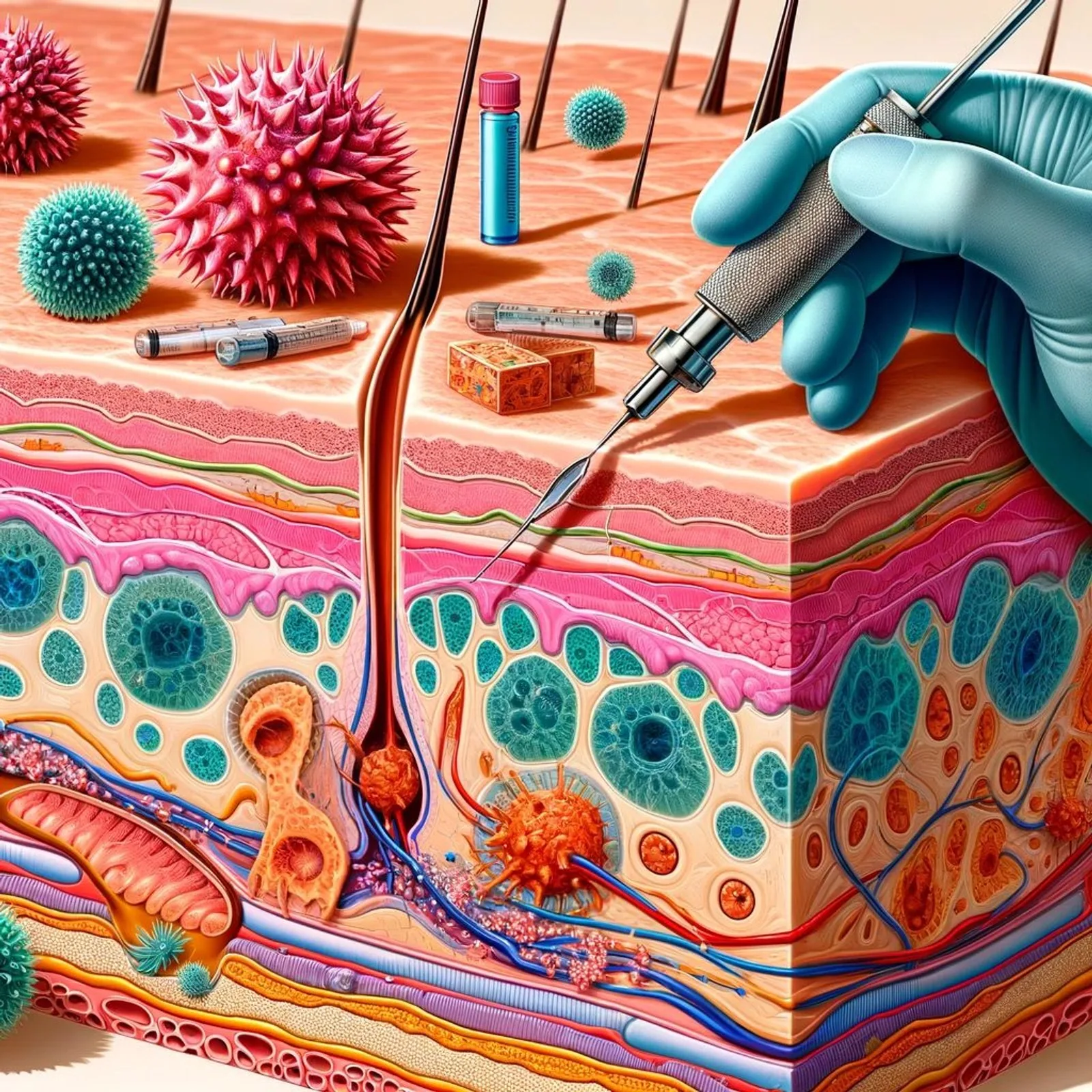
When you get a scratch or a cut, your body immediately starts repairing it — and that repair work is what you feel as itch. During healing, the skin releases signaling molecules such as histamine and other itch-related mediators, while nerve endings in and around the wound become more sensitive for a while. Together they create the tingling, prickling sensation we call itch.Reviews of itch physiologydescribe exactly this: itch is an active signal from healing skin, not evidence that something is going wrong.
Wounds heal in overlapping phases — inflammation, new tissue growth, and remodeling — and itch can appear in any of them, often becoming most noticeable as new tissue and nerve endings form. Areview of skin wound healingtraces those phases and helps explain why a repair site can feel busy: it is busy.
Why dry new skin itches more
New skin is not just younger — it's more fragile. While the skin barrier is rebuilding, it loses moisture more easily, and dry skin itches. That's why healing skin responds so well to simple moisture care: a bland moisturizer or ointment protects the barrier and calms the itch. Areview of skin barrier damage and itchcovers this mechanism and the topical options that address it.
Think of the barrier as a wall that keeps moisture in and irritants out. While it's still being rebuilt, both jobs are harder — so the area may be dry, sensitive, and itchy at the same time.
The itch–scratch cycle
Scratching feels good for a moment, then usually makes the itch worse. Scratching further irritates already-sensitized skin, raises the level of itch signals, and can damage the fragile new tissue the body is building. The result is a loop: itch, scratch, more itch, more scratch.
To break the cycle:
- Pat or press the area gently instead of scratching
- Apply moisturizer when it starts to itch (and keep it applied)
- Cover the area with a bandage or clothing to make absent-minded scratching less likely
- Keep fingernails short, especially around children
Things that can make the itch worse
- Irritation or allergy:Ointments, bandages, or adhesive tape can irritate sensitive new skin or trigger an allergic reaction. If a product's use lines up with new or worsening itch, stop it and let the area settle.
- Stress:Psychological stress is known to turn up itch sensation and scratching behavior —research on acute stress and itchdocuments the link.
- Heat and dryness:Hot water and low humidity both pull moisture from the skin, so keep showers lukewarm and moisturize afterward.
What actually helps
Simple, gentle care does most of the work:
- Moisturizer:A plain, fragrance-free ointment or cream is the single most reliable soother. Apply it several times a day.
- Cool compress:A clean cloth dampened with cool water, rested gently on the area, can calm the itch quickly.
- Oatmeal bath:Colloidal oatmeal is recognized as a skin protectant, and an oatmeal bath is a classic, gentle soother. Grind plain oats finely and soak in lukewarm (not hot) water.
- Aloe vera:The gel is a traditional soother; if you use a store-bought version, choose one without added fragrance or alcohol, which can sting.
If the itch is intense despite these steps, ask a pharmacist or clinician about targeted anti-itch options rather than layering on more home remedies.
When to check with a clinician
See a healthcare professional if the itching is severe, lasts a long time, or keeps you awake — or if it comes with any of these:
- Increasing redness, warmth, swelling, or pain at the wound
- Pus, discharge, or bad odor
- Fever
- A rash spreading beyond the injury, which can suggest an allergy
Itching by itself is common and usually harmless, but those additional signs deserve an evaluation.
Common questions
Is itching a sign of healing?
Often, yes — itch commonly accompanies normal repair, especially in the later stages. But itch alone doesn't guarantee everything is on track; judge the wound by how it looks and feels overall, not by itchiness.
Is itching a sign of infection?
Not by itself. Infection is more clearly suggested by spreading redness, warmth, increasing pain, pus, or fever. If any of those appear, seek medical advice.
Do wounds heal faster if they itch?
No. Itch doesn't speed healing, and scratching can slow it down by irritating the wound and raising the risk of infection. Let it heal on its own schedule — and resist helping.
Sources & further reading
- Raap, U., Ständer, S., & Metz, M. (2011). Pathophysiology of itch and new treatments. Current Opinion in Allergy and Clinical Immunology.
- Yosipovitch, G., et al. (2019). Skin barrier damage and itch: review of mechanisms, topical management and future directions. Acta Dermato Venereologica.
- Sorg, H., et al. (2016). Skin wound healing: an update on the current knowledge and concepts. European Surgical Research.
- Mochizuki, H., et al. (2018). Impact of acute stress on itch sensation and scratching behaviour. British Journal of Dermatology.
That’s the mechanism. The wonder is still allowed.