
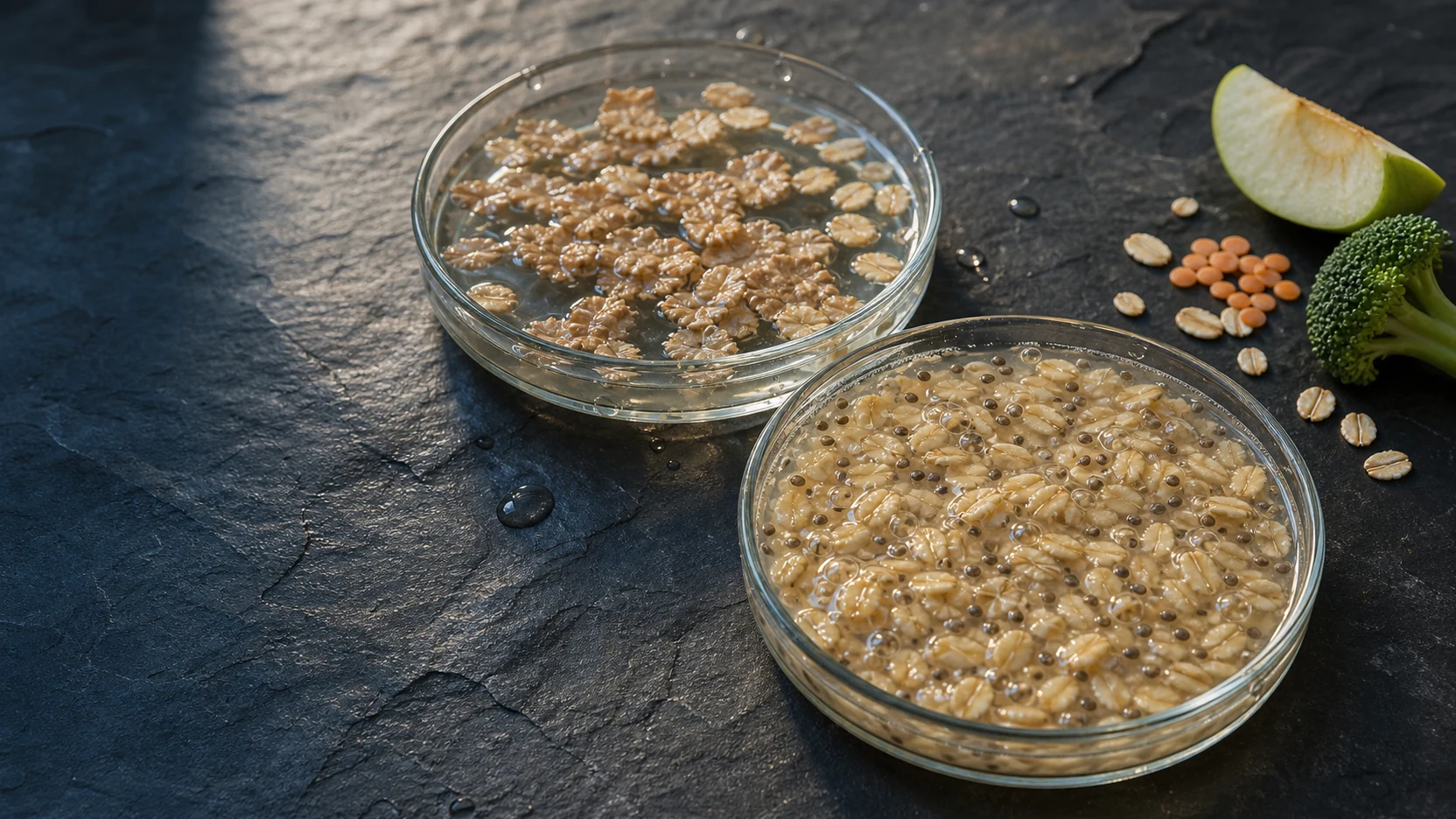
Quick Answer:Your body needs fiber because it keeps digestion regular, feeds the beneficial bacteria in your gut, slows the absorption of sugar into the bloodstream, and helps lower cholesterol. High-fiber diets are consistently associated with lower risk of heart disease, type 2 diabetes, and colorectal cancer — yet most people eat only about half the recommended amount.
What fiber is (and isn't)
Dietary fiber is the part of plant food your body cannot digest. Unlike starches and sugars, fiber passes through the small intestine mostly intact and reaches the large intestine, where gut bacteria take over. There are two broad types with different jobs:
- Insoluble fiber— found in whole grains, nuts, and many vegetables — does not dissolve in water. It adds bulk to stool and helps food move through the digestive tract, which prevents constipation.
- Soluble fiber— found in oats, beans, fruits, and psyllium — dissolves into a gel-like substance that slows digestion, helps control blood sugar, and binds to cholesterol.
Most whole plant foods contain both, which is one reason dietary guidance emphasizes whole foods rather than isolated fiber supplements.
Digestive health
Fiber's best-known job is keeping the digestive system regular:
- It adds bulk to stool and absorbs water, softening it.
- It speeds the passage of material through the gut.
- Regular, adequate fiber intake is associated with a lower risk of hemorrhoids and diverticular disease.
TheHarvard T.H. Chan School of Public Healthsummarizes the digestive benefits of fiber as well as its role in long-term disease prevention.
Feeding the gut microbiome
Although you cannot digest fiber, the trillions of bacteria in your colon can — and they thrive on it. When gut bacteria ferment fiber, they produceshort-chain fatty acidssuch as butyrate, acetate, and propionate. These compounds:
- Feed the cells lining the colon.
- Help regulate inflammation in the digestive tract.
- Serve as an energy source the body can use.
Different types of fiber feed different bacterial species, which is why eating a variety of fiber sources — whole grains, legumes, fruits, vegetables, nuts — supports a more diverse microbiome than eating one fiber source alone.Reviews of the gut-microbiome evidencedescribe this prebiotic role as one of fiber's clearest effects on health.
Blood sugar and appetite
Soluble fiber slows the emptying of the stomach and the absorption of sugar into the bloodstream. That flattens the rapid rises and falls in blood glucose that follow refined, low-fiber meals, and it is one reason fiber-rich foods are recommended as part of diabetes management — theCDC highlights fiber's role in blood sugar control.
Fiber also affects appetite. Because it is bulky and moves slowly, it increases the feeling of fullness, which tends to reduce how much people eat at a sitting and how often they snack. Observational studies consistently link higher fiber intake with lower body weight, though fiber alone is not a weight-loss treatment.
Heart health and cholesterol
Soluble fiber binds to cholesterol-containing bile acids in the intestine and carries them out of the body, which forces the liver to pull more cholesterol from the blood to make new bile. Clinical trials show this produces a modest, measurable reduction in LDL ("bad") cholesterol for fibers such as oat beta-glucan, psyllium, and pectin, as summarized by theHarvard T.H. Chan School of Public Health.
Population-level evidence ties the whole pattern together: a2019 series of systematic reviews and meta-analyses in The Lancetfound that people who eat the most fiber have lower rates of cardiovascular disease, type 2 diabetes, and colorectal cancer than people who eat the least. These are associations — fiber-rich diets also tend to include other healthy foods — but the findings are consistent across many studies and populations.
How much fiber do you need?
Guidance in the United States recommends roughly25–30 grams per dayfor adults, and theWorld Health Organizationsimilarly recommends fiber as part of a healthy diet. Most Americans consume only about half the recommended amount. The practical advice is simple and well supported: more whole grains, legumes, vegetables, fruits, nuts, and seeds — and increases made gradually, with plenty of water, to avoid bloating.
The bottom line
Fiber matters because it does things no other nutrient does: it keeps digestion moving, feeds the gut bacteria that support health, smooths blood sugar responses, and helps lower cholesterol. The evidence linking fiber-rich diets to lower risk of chronic disease is among the most consistent in nutrition science — and the typical diet is still short of the amount the research points to.
Sources & further reading
- Harvard T.H. Chan School of Public Health
- Reviews of the gut-microbiome evidence
- CDC highlights fiber's role in blood sugar control
- 2019 series of systematic reviews and meta-analyses in The Lancet
- World Health Organization
That’s the mechanism. The wonder is still allowed.