Quick Answer:A purr is a low-frequency sound produced in a cat's larynx during breathing. Cats purr in friendly interactions and also during distress. Experiments show that isolated cat larynges can generate purring-like frequencies without repeated neural stimulation, but how a living cat controls purring remains under study.
Purr-fect Introduction
Cat purring is one of the most recognizable and heartwarming sounds in the animal world. Unlike otherfeline vocalizationssuch as meows or hisses, purring happens during both breathing in and breathing out. This makes it a continuous, low-pitched hum that has fascinated scientists and pet owners alike.

While we often think a purr means happiness, cats will also purr in more complex situations—such as when they are stressed, in pain, or seeking comfort. Understanding the mechanics and meaning behind the purr opens a fascinating window intocat communicationandcat psychology.
How cats produce their purr
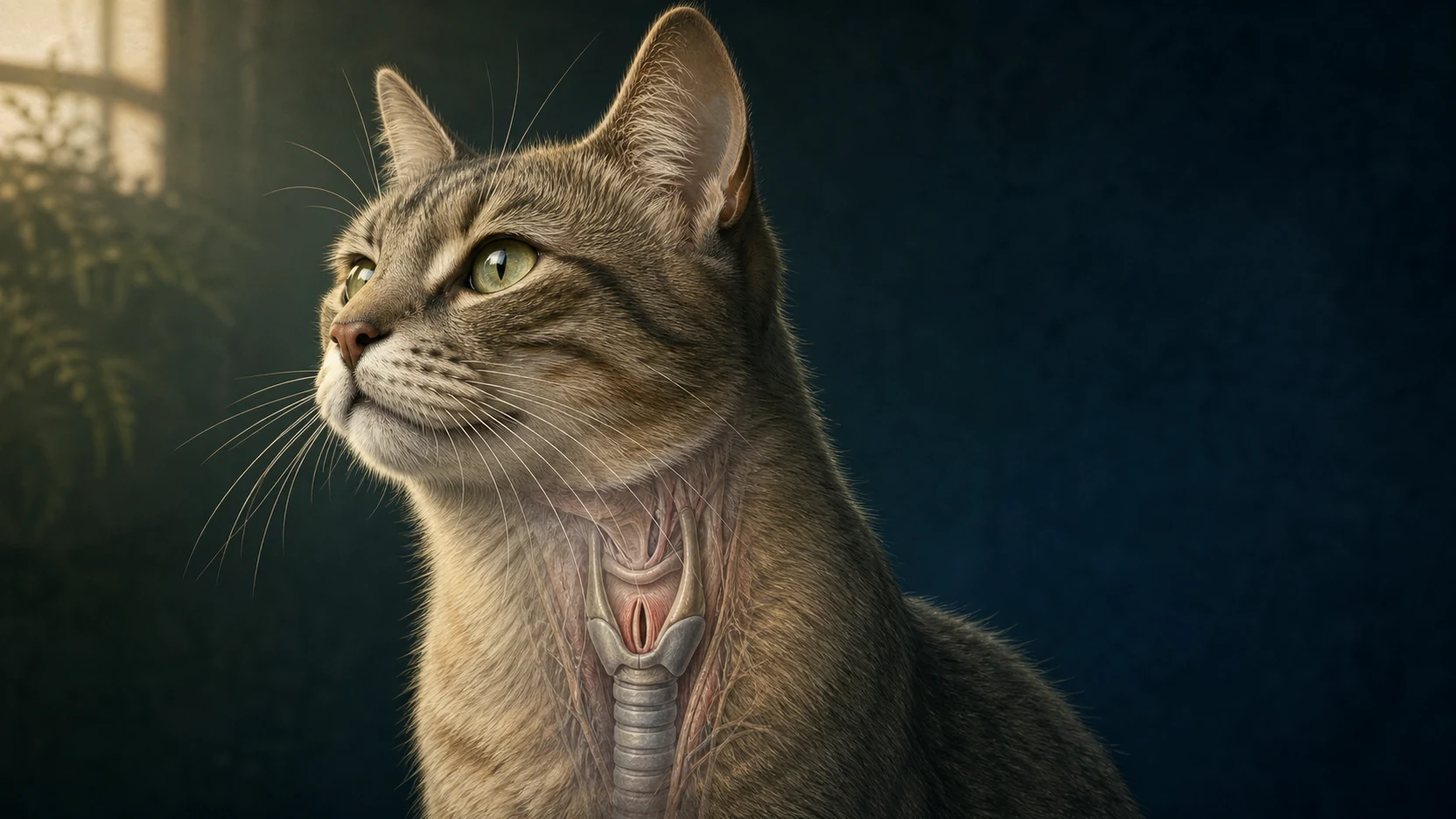
One longstanding explanation involves rhythmic activation of laryngeal muscles. A2023 experiment by Herbst and colleaguesshowed that excised domestic-cat larynges could also generate purring-range sounds under airflow without active muscle contraction or neural input. Connective tissue embedded in the vocal folds helps them oscillate at low frequencies.
An isolated-larynx experiment establishes a physical possibility. It does not tell us that living cats always purr passively, or settle how their nervous systems start and regulate the sound.
Purring as a Social Signal
Purring is an important part ofcat communicationwith both felines and humans. Cats may purr:

- During friendly social interactions like grooming or cuddling.
- To signal comfort and trust toward their human companions.
- As a request, often accompanied by a special "soliciting purr" when they want food or attention.
Kittens start purring within days of birth, which may help them bond with their mother and guide her attention—making it an essential social signal infeline behaviorfrom the very start.
What about self-soothing and healing?
Purring during pain or distress is sometimes interpreted as self-soothing. That interpretation does not demonstrate tissue repair. Comparing purr frequencies with frequencies used in vibration experiments cannot establish that a cat's own purr heals fractures or reduces inflammation. The sources previously used here did not supply controlled evidence for those treatment claims.
The purr's human appeal
Many people find a purring cat comforting, and a purr can be part of an enjoyable interaction with a pet. That experience is different from a measured medical outcome. There is no basis in the sources reviewed here to describe sitting with a cat as physical therapy or to promise bone healing in people.
Read the context as well as the sound
A purr is one part of feline communication. Consider posture, appetite, activity and the situation alongside it; a purring cat is not necessarily comfortable or healthy. The sound is interesting both socially and mechanically without needing an unproven wellness claim.
Sources & further reading
- Herbst et al. (2023): Domestic cat larynges can produce purring frequencies without neural input
- Library of Congress: Why and how do cats purr?
That’s the mechanism. The wonder is still allowed.