
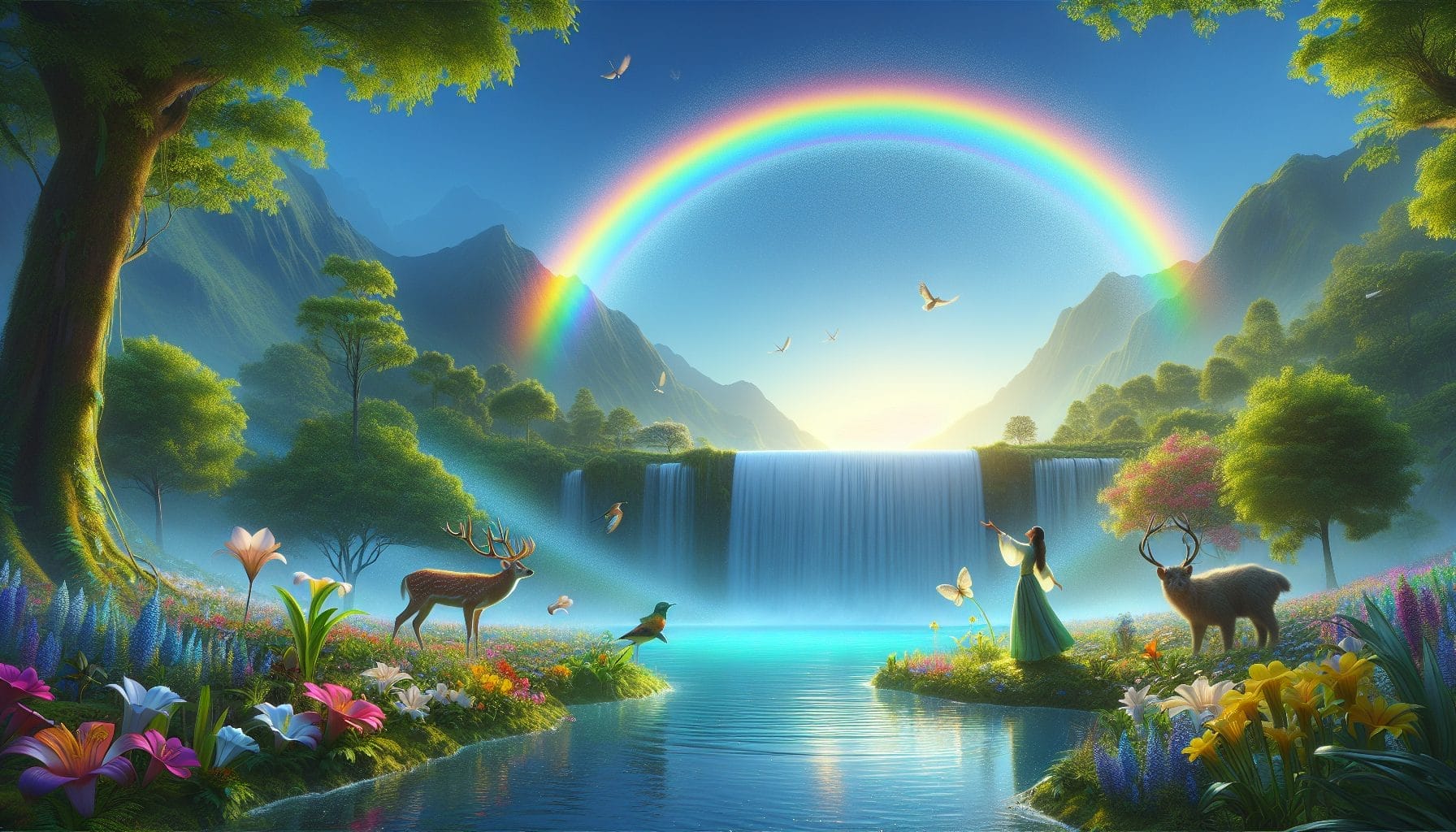
Quick Answer: Rainbows form when sunlight enters water droplets in the atmosphere, undergoes refraction, reflection, and dispersion, separating white light into its component colors. This spectacular natural phenomenon requires specific conditions: the sun behind the observer and water droplets (usually from rain) in the opposite direction.
The Basics of Rainbow Formation
Rainbows are one of nature’s most magnificent displays, but what exactly happens to create these colorful arcs in the sky? The magic begins with the interaction between light and water.
When sunlight travels through the air and encounters water droplets suspended in the atmosphere, three key optical processes occur:
- Refraction – As light enters a water droplet, it slows down and bends (or refracts). This happens because water is denser than air, causing light to change direction.
- Reflection – Once inside the droplet, light bounces off the back surface in a process called internal reflection.
- Dispersion – Different colors of light bend by different amounts because they travel at slightly different speeds through water.
The journey of a light ray through a raindrop follows a specific path: it enters the droplet, bends inward, reflects off the back surface, and then bends again as it exits the droplet. This double refraction combined with dispersion is what creates the rainbow’s magic.
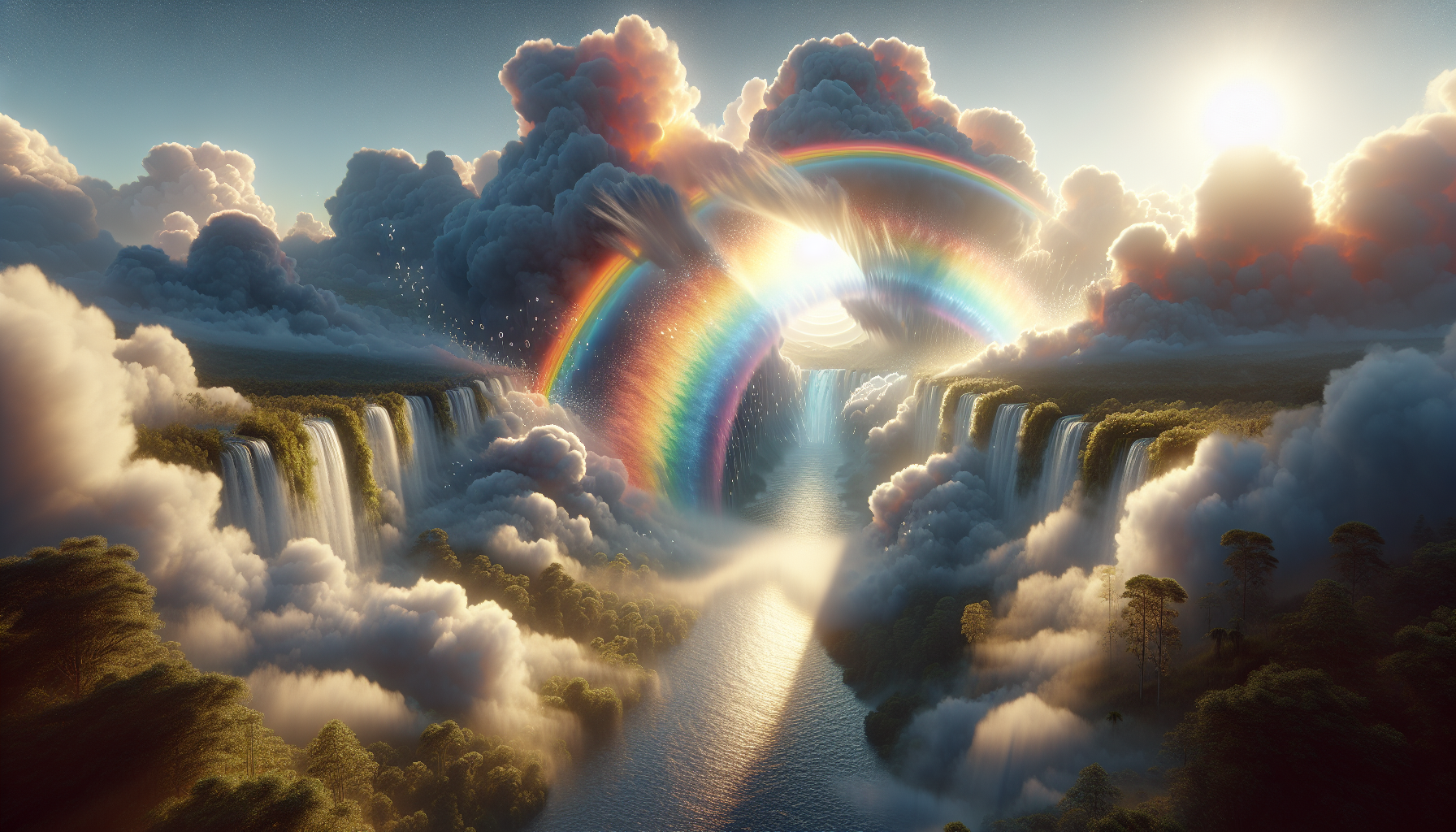
Think of each raindrop as a tiny prism, separating white sunlight into its component colors. Millions of these droplets collectively create the spectacular arc we see in the sky.
The Spectrum of Colors
What we call “white” sunlight is actually a blend of all visible light wavelengths. When this light passes through water droplets, an amazing separation occurs called dispersion.
During dispersion, each color bends at a slightly different angle because each color has a different wavelength:
- Red light (longest wavelength) bends the least, exiting the droplet at about a 42° angle
- Orange light bends slightly more
- Yellow bends even more
- Green continues the pattern
- Blue bends significantly more
- Indigo bends even further
- Violet light (shortest wavelength) bends the most, exiting at about a 40° angle
This is why rainbows always display colors in the same order: red on the outside (top) of the arc and violet on the inside (bottom). This sequence is commonly remembered as ROYGBIV (Red, Orange, Yellow, Green, Blue, Indigo, Violet).
The separation isn’t perfect – colors blend slightly into each other rather than forming sharp boundaries, creating the smooth gradient we observe. The separation of white light into seven colors happens precisely at the boundary between air and water, showcasing nature’s remarkable optical properties.
Viewing Conditions for Rainbows
Not every rainy day produces a rainbow. Specific conditions must align for this optical wonder to appear:
- The sun must be behind the observer
- Water droplets must be in front of the observer
- The sun should be relatively low in the sky (under 42° above the horizon)
- The air must contain suspended water droplets (from rain, mist, spray, etc.)
Rainbows always appear as circular or semicircular arcs centered on what’s called the “antisolar point” – the point directly opposite the sun from your perspective (essentially where the shadow of your head would fall). This is why rainbows are always positioned at approximately 42° from this antisolar point.
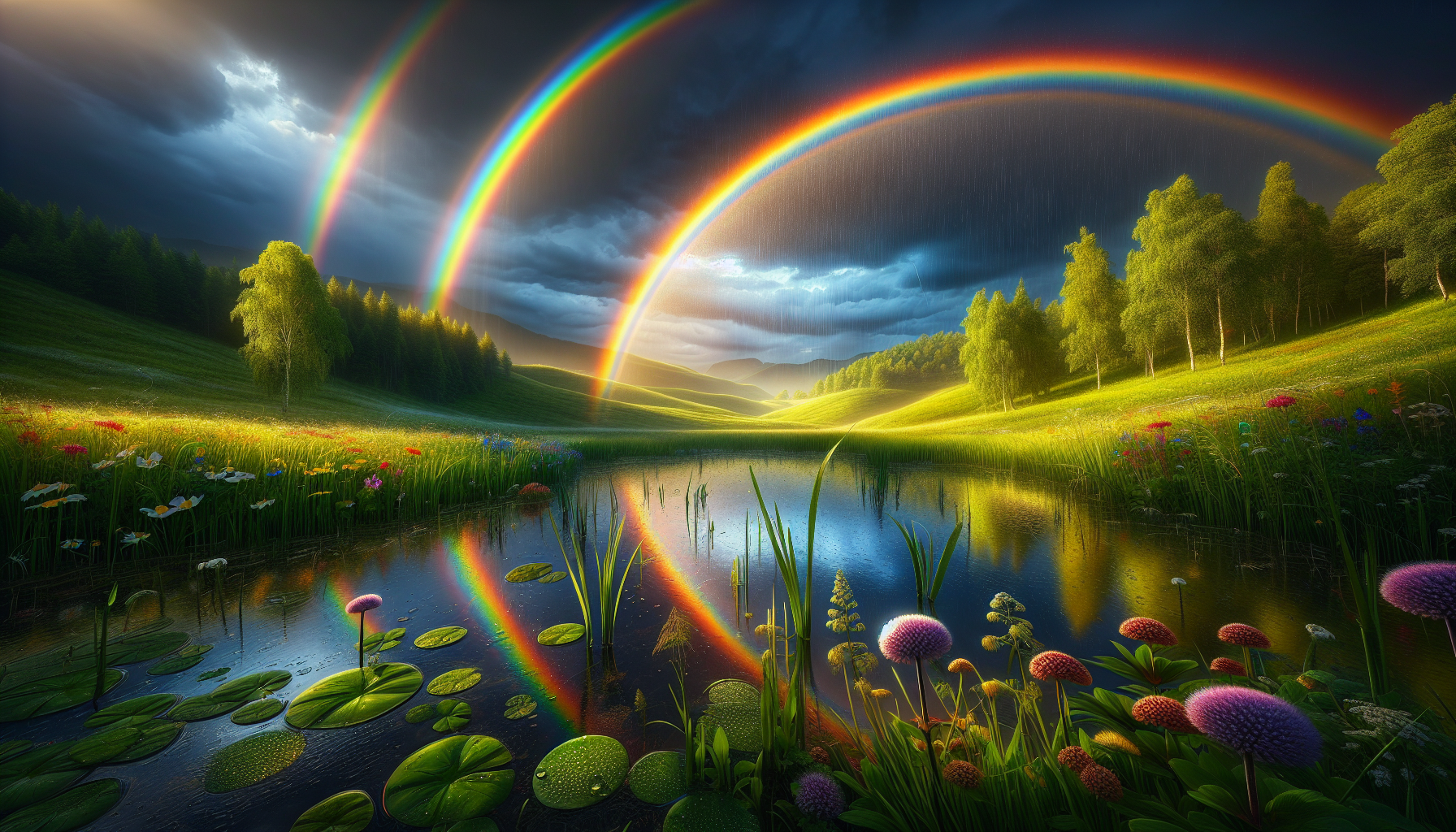
Fascinatingly, every observer sees their own unique rainbow. The water droplets that create your rainbow are at a different position than those creating a rainbow for someone standing even a short distance away. This is because each observer has their own antisolar point and their own specific 42° viewing angle to the droplets.
Most rainbows appear as semicircles because the ground gets in the way of seeing the full circle. However, if you’re in an elevated position like an airplane or mountaintop, you might glimpse a rare full-circle rainbow!
Variations of Rainbows
While the primary rainbow is the most commonly observed type, several fascinating variations exist:
Secondary Rainbows
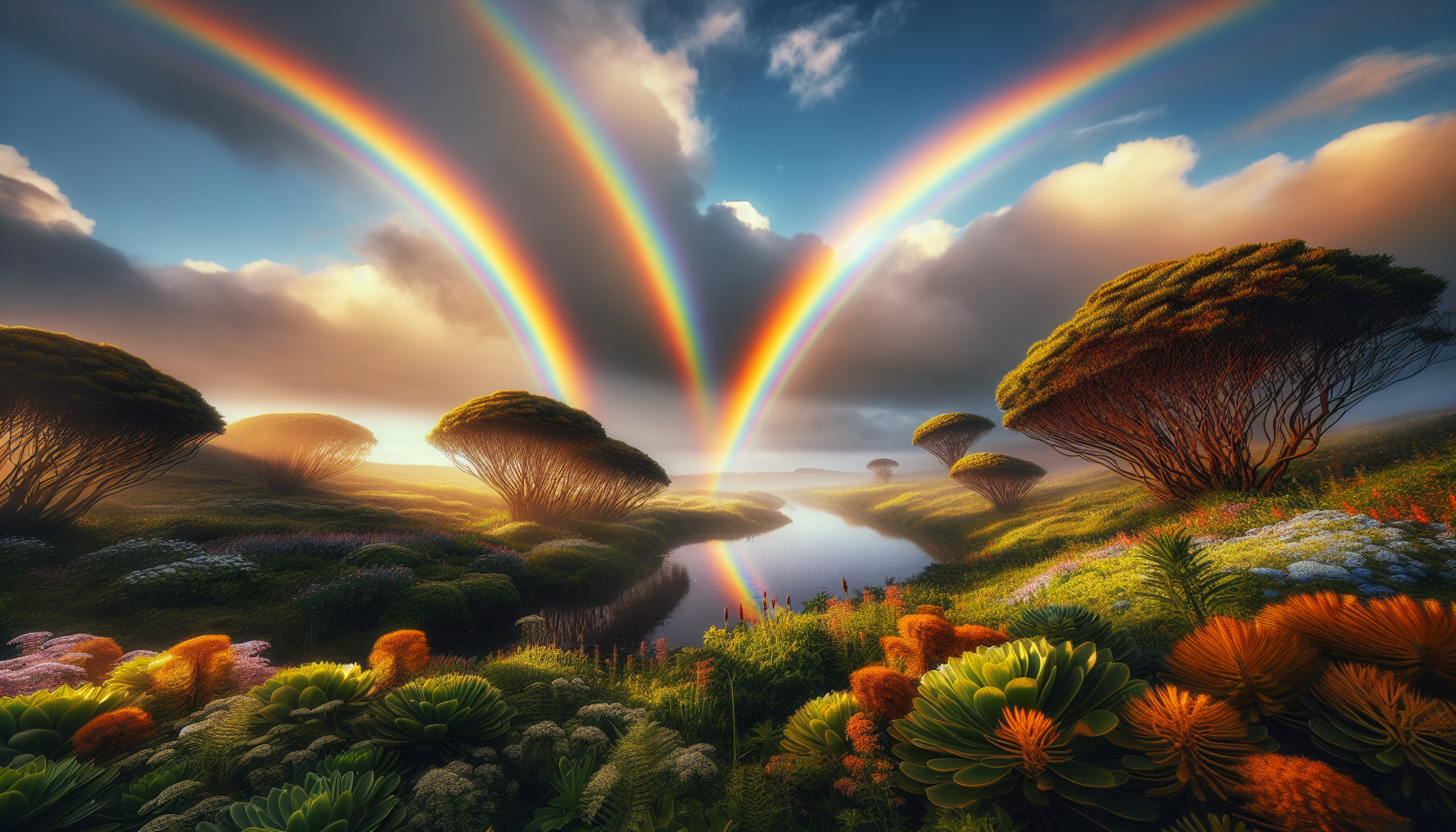
Sometimes you might notice a second, fainter rainbow outside the primary one. This secondary rainbow forms when light reflects twice inside water droplets before exiting. The extra reflection causes:
- The colors to appear in reverse order (violet on the outside, red on the inside)
- The rainbow to appear dimmer (less light makes it through two reflections)
- A wider arc positioned about 50° from the antisolar point
Between the primary and secondary rainbows, you might notice a darker band called “Alexander’s dark band,” named after Alexander of Aphrodisias who first described it in 200 AD.
Supernumerary Rainbows
Sometimes you might spot faint, closely-spaced colored bands just inside the primary rainbow. These supernumerary rainbows result from interference between light waves following slightly different paths through very small, uniform raindrops.
Moonbows
Rainbows aren’t exclusive to sunlight! When bright moonlight (usually from a full moon) strikes water droplets, it can create a moonbow. These are rarer and appear fainter, often looking white to our eyes because the light is too dim for our color receptors to detect the spectrum clearly.
Other Rainbow Phenomena
Nature offers even more rainbow variations:
- Fogbows – Formed in fog where droplets are much smaller, creating paler, broader bows
- Spray bows – Created in the mist of waterfalls, fountains, or ocean spray
- Dewbows – Tiny rainbows formed in morning dew on grass or spider webs
Historical Insights into Rainbows
Humans have marveled at and tried to explain rainbows for centuries. The scientific understanding we have today developed through many brilliant minds across different cultures:
- Shen Kuo (11th century China) made early observations about the relationship between raindrops and rainbow formation.
- René Descartes (1637) conducted experiments with water-filled glass spheres, demonstrating how one reflection inside droplets creates primary rainbows while two reflections create secondary ones.
- Isaac Newton (17th century) conducted his famous prism experiments, proving that white light is composed of different colors and explaining the order of colors in rainbows.
- Thomas Young (1804) used the wave theory of light to explain supernumerary rainbows, demonstrating interference patterns in light.
Other notable contributors include Arab scientist Ibn al-Haytham (Alhazen) who made important early studies of optics and refraction that would later contribute to rainbow science.
Conclusion: The Beauty and Science of Rainbows
Rainbows represent a perfect marriage of scientific principles and natural beauty. What appears as magic to the casual observer is actually a demonstration of light’s fascinating properties as it interacts with water droplets in our atmosphere.
From the precise angles of refraction to the orderly separation of colors, rainbows remind us that our world operates according to elegant physical laws. Yet understanding the science behind rainbows doesn’t diminish their wonder—it enhances our appreciation of nature’s complexity and beauty.
Next time you spot that colorful arc stretching across the sky after a rainfall, you’ll know you’re witnessing millions of tiny prisms working together to create one of nature’s most spectacular light shows.