
Quick Answer:Sunscreen works by absorbing ultraviolet (UV) radiation before it can damage skin cells. That is true of both major filter families: so-called chemical (organic) filters and mineral (inorganic) filters like zinc oxide and titanium dioxide. Despite the familiar description, mineral filters don't mainly bounce UV rays away — they absorb them, with a small scattering contribution. What differs between the two families is mostly feel, stability, and how quickly they protect.
Ever wonder how that creamy lotion in your beach bag actually shields your skin from the sun's powerful rays? Let's look at what the filters really do — and clear up one of the most common myths about how sunscreen works.
Sun Shield 101: How Sunscreen Saves Your Skin
Sunscreen acts as your skin's first line of defense against ultraviolet radiation. It works by intercepting UV before it reaches living skin cells — and the core mechanism is the same for every type of filter: absorption. The molecules or particles take in UV energy and dissipate it as heat.
When you apply sunscreen, you're creating a protective layer that intercepts UV radiation before it can penetrate your skin. This protection happens through one main mechanism, delivered two ways:
- Organic ("chemical") filters:molecules that soak up UV energy and release it as heat
- Inorganic ("mineral") filters:small particles of zinc oxide or titanium dioxide that also work mainly by absorbing UV — with a small amount of scattering mixed in
A bit of reflection and scattering does occur — that's real physics — but for the mineral filters it accounts for only a few percent of UV protection; the rest is absorption. Just assome materials can absorb UV lightwhile remaining transparent to visible light, sunscreen ingredients are selected to capture the invisible ultraviolet portion of sunlight while letting visible light pass through.
UV Radiation 101: Why Sunscreen Matters
Understanding UV radiation helps explain why sunscreen is so important for skin protection. Sunlight contains different types of radiation, but two types pose the greatest threat to your skin:
UVB Rays: The Burning Culprit
UVB rays primarily cause sunburn and direct DNA damage that can lead to skin cancer. These rays have higher energy and directly attack the outer layers of your skin. When you get a painful red sunburn after forgetting sunscreen at the beach, you're experiencing UVB damage firsthand.
UVA Rays: The Silent Ager
UVA rays penetrate deeper into your skin, contributing to premature aging, oxidative stress, inflammation, and skin cancer risk. According toStanford Medicine, UVA radiation creates long-term damage that accumulates over time, leading to wrinkles, age spots, and photoaging.
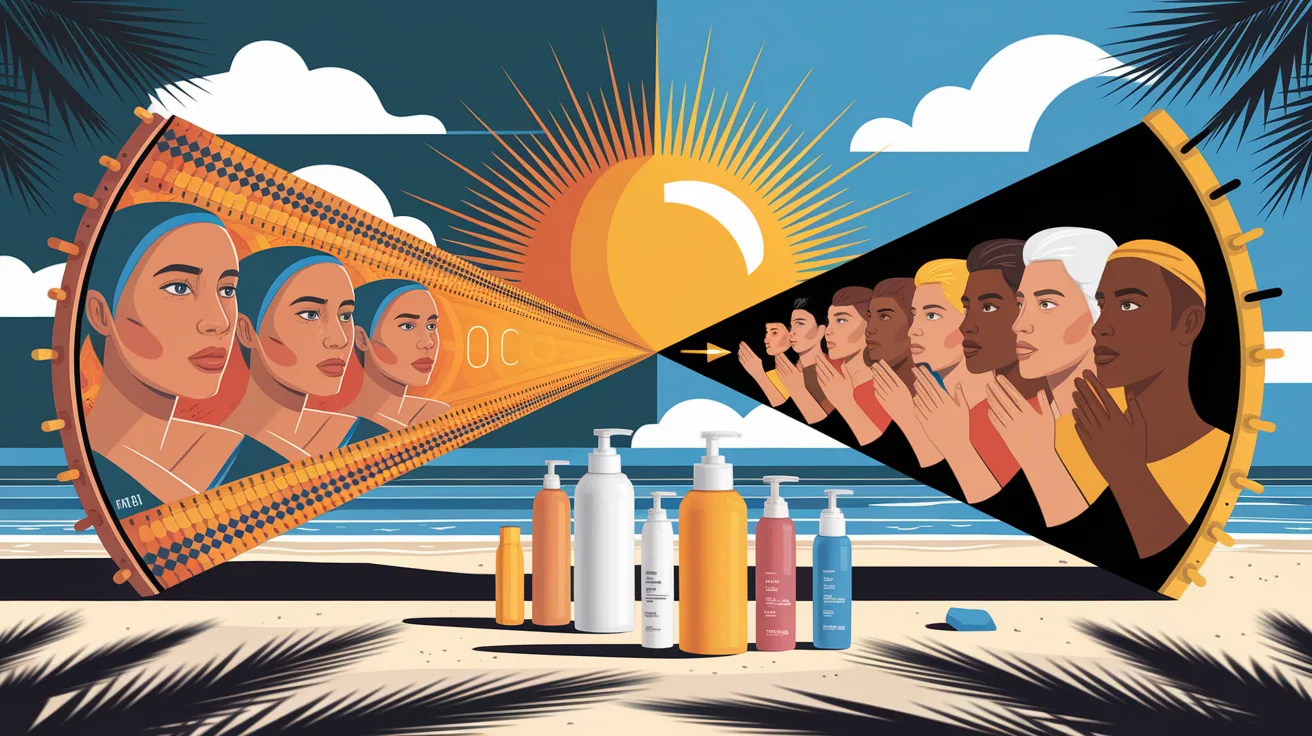
Both types of UV radiation generate free radicals in your skin cells, which cause oxidative damage and break down important proteins like collagen. This is why dermatology experts emphasize daily sun protection as the most effective anti-aging strategy.
UV radiation damages skin cells at the molecular level, making sun protection crucial for preventing both immediate sunburn and long-term skin damage.
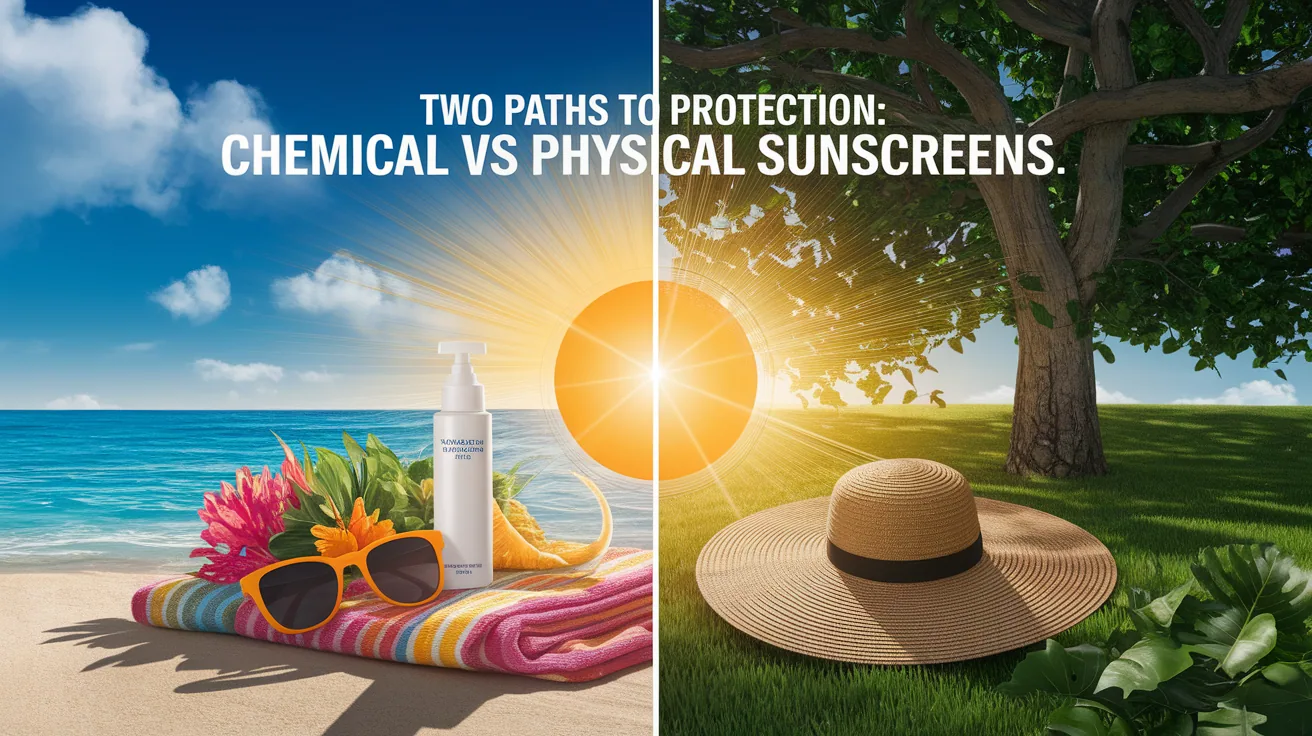
Two Paths to Protection: Chemical vs. Mineral Sunscreens
The two families differ in their filter chemistry, not in their fundamental strategy. Organic filters are soluble compounds; mineral filters are insoluble particles. Both protect by absorbing UV — the practical differences show up in how they feel on skin, their stability, and who should use which.
Chemical Sunscreens: The UV Absorbers
Chemical sunscreens contain organic compounds that absorb ultraviolet radiation. Common active ingredients include:
- Avobenzone:Excellent UVA protection
- Octinoxate:Effective against UVB rays
- Homosalate:UVB absorption
- Oxybenzone:Broad-spectrum protection (though facing environmental scrutiny)
These compounds work by absorbing UV energy, which causes their molecules to enter an excited state. They then dissipate this absorbed energy as heat, preventing UV rays from penetrating your skin. It's similar tohow pigments absorb specific wavelengths of light— the molecules are engineered to capture invisible UV radiation while letting visible light pass through.
According to theAmerican Chemical Society, some organic ingredients can degrade or form free radicals over time, which is one reason formulations often combine and stabilize their filters.
Mineral Sunscreens: How Zinc Oxide and Titanium Dioxide Work
Mineral sunscreens use inorganic particles — primarily zinc oxide and titanium dioxide — that sit on the skin's surface. They are often described as "reflecting" or "blocking" UV like tiny mirrors, but careful optical measurements tell a different story:zinc oxide and titanium dioxide protect skin mainly by absorption, not by reflection or scattering. Their average reflection across the UV range is only about 4–5% — less than SPF 2 worth of protection — while they do scatter visible light, which is why they can leave a whitish cast.
In other words, both filter families work through the same basic physics: the particles aren't tiny mirrors so much as UV absorbers that also happen to scatter visible light. Mineral sunscreens work immediately upon application and are often recommended for people with sensitive skin.
Hybrid Formulations
Many modern sunscreens combine organic and mineral filters to cover more of the UV spectrum and improve how the product feels on your skin.
SPF Uncovered: What the Numbers Mean for Your Skin
SPF (Sun Protection Factor) measures how long sunscreen prolongs the time it takes for UVB rays to redden your skin compared to no protection. Understanding these numbers helps you choose the right level of protection.
The SPF Scale Explained
| SPF Level | UVB Protection | Theoretical Time Extension |
|---|---|---|
| SPF 15 | ~93% | 15x longer before burning |
| SPF 30 | ~97% | 30x longer before burning |
| SPF 50 | ~98% | 50x longer before burning |
Does a higher SPF provide significantly more protection? The jump from SPF 30 to SPF 50 only increases protection by about 1%, according to data from theSkin Cancer Foundation. However, this small difference can be meaningful during extended outdoor exposure.
Proper Application Guidelines
SPF ratings assume proper application, which most people don't achieve:
- Amount needed:One ounce (two tablespoons) for entire body coverage
- Face application:Nickel-sized amount for adequate protection
- Timing:Apply 15–30 minutes before sun exposure for chemical sunscreens
- Reapplication:Every two hours or after swimming/sweating
Is sunscreen effective immediately after application? Mineral sunscreens work instantly, while chemical sunscreens need 15–30 minutes to fully activate as the active ingredients bind with your skin.
Broad-Spectrum and Photostability: Staying Protected All Day
Broad-spectrum protection ensures your sunscreen guards against both UVA and UVB rays. Formulations combine multiple UV filters to absorb across a wide range of ultraviolet wavelengths — plus the small scattering contribution the particles add. TheNational Center for Biotechnology Informationexplains that effective formulations require careful balancing of different active ingredients to cover the entire UV spectrum.
Just asa molecule's structure affects the light it absorbs, different sunscreen ingredients are designed to target specific UV wavelengths.

Photostability: Maintaining Protection
Photostability refers to a sunscreen's ability to maintain effectiveness after exposure to sunlight. Some chemical ingredients degrade when exposed to UV radiation, reducing their protective power over time.
Photostable ingredients include:
- Ecamsule:Maintains UVA protection under sun exposure
- Methylene bis-benzotriazolyl tetramethylbutylphenol (MBBT):Long-lasting broad-spectrum coverage
- Bis-ethylhexyloxyphenol methoxyphenyl triazine (BEMT):Stable UVA and UVB protection
Mineral filters like zinc oxide and titanium dioxide are naturally photostable, which explains why they maintain consistent protection throughout the day.
Beyond the Bottle: Living Safely Under the Sun
Effective sun protection extends beyond choosing the right sunscreen. A comprehensive approach combines multiple strategies for optimal skin protection.
Smart Sun Safety Practices
- Seek shade:Especially during peak UV hours (10 AM – 4 PM)
- Wear protective clothing:Tightly woven fabrics provide excellent UV barriers
- Use wide-brimmed hats:Protect face, neck, and ears
- Don't forget sunglasses:UV radiation can damage your eyes too
- Practice daily use:Apply sunscreen even on cloudy days
Environmental and Safety Considerations
Sunscreens undergo rigorous safety testing and are considered safe when used as directed. However, environmental concerns have led to innovations in reef-safe formulations. Some chemical ingredients like oxybenzone have raised concerns about coral reef damage, prompting regulatory changes and new formulations.
According toStanford Medicine research, both chemical and mineral sunscreens are safe for human use, though mineral sunscreens may be preferable for those with sensitive skin or environmental concerns.
Choosing the Right Sunscreen
Select sunscreens that are:
- Broad-spectrum (protects against UVA and UVB)
- SPF 30 or higher for daily use
- Water-resistant for swimming or sweating
- Suited to your skin type and preferences
The science behind how sunscreen ingredients work shows us that both chemical and mineral formulations offer effective protection when applied properly and reapplied regularly.
Wrapping Up
Sunscreen is a remarkable bit of practical chemistry — invisible protection that stands between your skin and ultraviolet radiation. Whether you choose an organic-filter or mineral-filter formula, both work primarily by absorbing UV energy; the rest comes down to fit and preference.
Remember that consistent, proper application matters more than the specific type of sunscreen you choose. Apply generously, reapply frequently, and combine sunscreen with shade, clothing, and timing for comprehensive sun safety. Your skin will thank you for understanding — and correctly using — this remarkable scientific tool for life under the sun.
Sources & further reading
- Stanford Medicine
- zinc oxide and titanium dioxide protect skin mainly by absorption
- National Center for Biotechnology Information
That’s the mechanism. The wonder is still allowed.