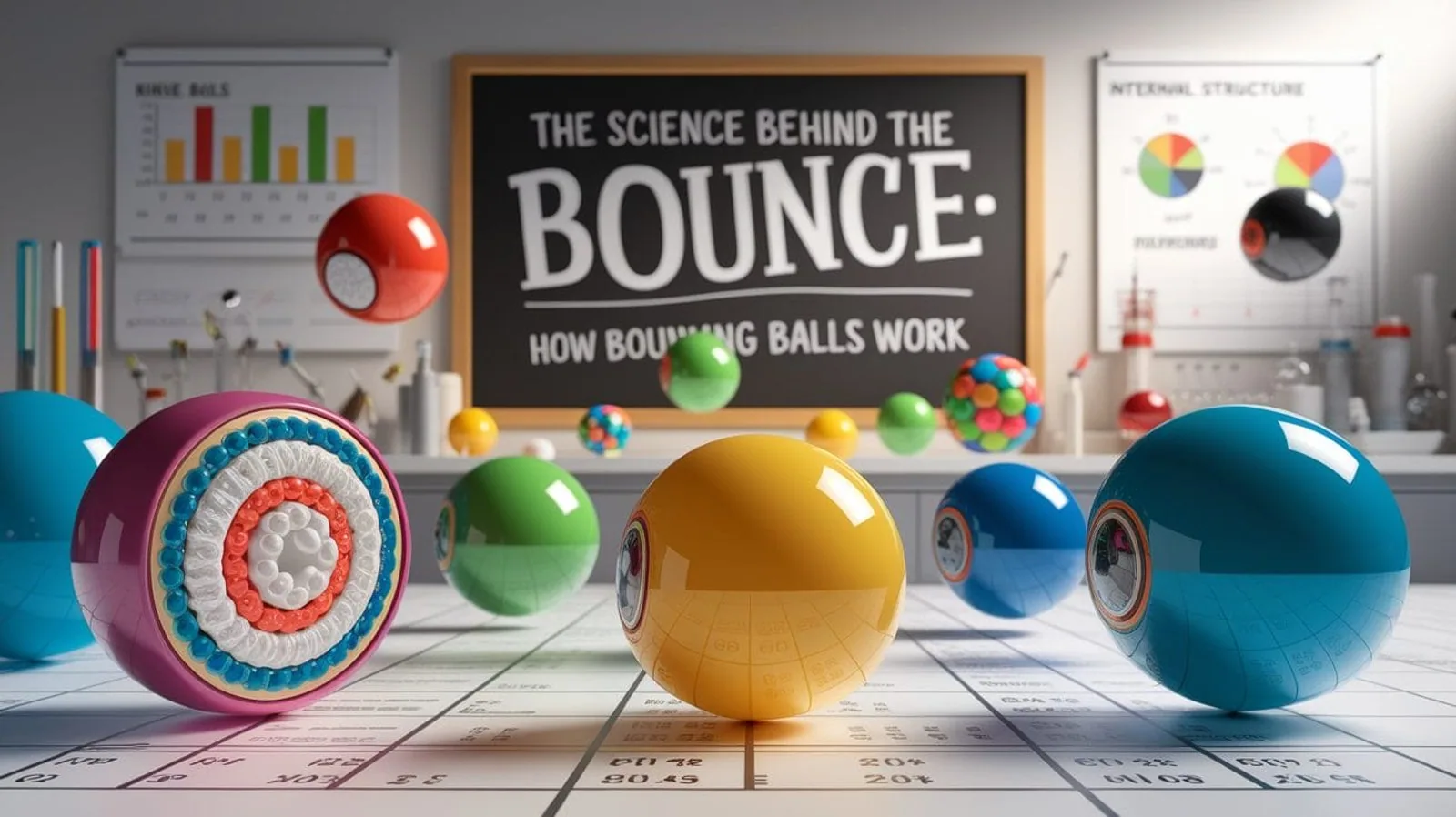
Quick Answer:A bouncing ball is a showcase of energy transformations, elasticity, and motion under gravity’s pull. When it hits a surface, energy is stored and released, giving it that satisfying rebound—though factors like material, air pressure, and surface type determine just how high it goes.
Ready, Set, Bounce!
Whether it’s a basketball hitting the court or a tennis ball smacking into the pavement, bouncing is all about energy moving from one form to another and back again. The delightful “boing” isn’t just fun—it’s physics in action. A ball’s bounce depends on itselasticity, the surface it hits, and the way forces likegravityandair resistanceplay together. Some balls seem springy and full of life, while others hit the ground with a dull thud—each telling a story of material properties and energy loss.

Energy Transformations at Impact
From the moment you drop a ball, theenergy conversioncycle begins. Here’s what happens, step by step:

- At rest in your hand, the ball haspotential energydue to its height.
- As it falls, that potential energy turns intokinetic energy—motion energy.
- When it hits the ground, part of that kinetic energy stores inside the ball aselastic potential energythroughdeformation.
- As the ball returns to its shape, that stored energy becomes kinetic energy again, sending it upward.
Because of internal energy losses (like heat or sound), each bounce is a little lower than the last. You can explore more about these processes in theenergy conversions in bouncing ballsguide.
Elasticity and the Coefficient of Restitution
The “springiness” of a ball determines how well it bounces, and this is whereelasticitycomes into play. A rubber ball, for example, quickly returns to its original shape after impact, restoring most of the stored energy to motion. A lump of clay, on the other hand, doesn’t bounce because it can’t recover its shape efficiently.
Scientists use something called thecoefficient of restitution(COR) to measure bounce efficiency. This number ranges between 0 (no bounce at all) and 1 (a perfect, energy-conserving bounce). A basketball on a hardwood court might have a COR around 0.85, meaning it gives back about 85% of its collision energy toward the next bounce.
The Five Phases of a Bounce
Every bounce can be broken down into clear stages, each showing off unique physical processes:
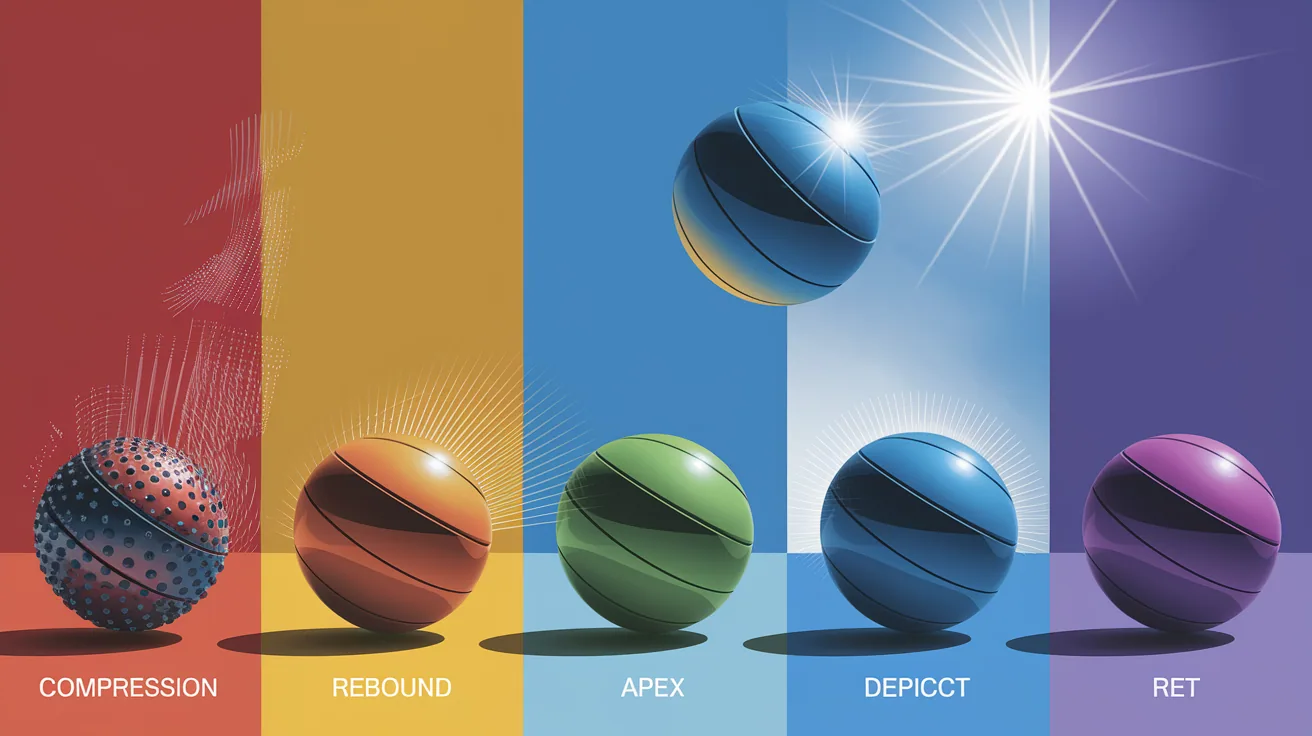
- Initial Impact:The ball first touches the surface, slowing due toimpact force.
- Maximum Compression:The ball squashes to its flattest point, storing elastic potential energy.
- Elastic Rebound:The ball pushes back, converting stored energy into upward motion.
- Zero Contact Rebound:The ball is barely grazing the surface as it lifts away.
- Full Rebound:Gravity slows its climb until peak height is reached and the cycle repeats.
You can see these stages in action in thisvisual explanation.
External Factors That Shape the Bounce
Several outside variables can change how high or far a ball bounces:

- Surface Type:Hard, smooth surfaces like concrete return more energy than soft grass or carpet.
- Friction:Affects spin and horizontal movement. According tostudies on bounce mechanics, surfaces with more grip can change a ball’s rebound angle and spin rate.
- Air Pressure:Higher internal pressure, as in an inflated basketball, tends to increase bounce height by improving elasticity.
- Temperature:Cold balls can be stiffer, reducing bounce, while warmer materials tend to be more flexible.
- Material Properties:From polymer structure to surface texture, the ball’s construction impacts energy storage and release.
Predicting Height and Range
Usingclassical mechanics, you can predict a ball’s motion. The height of each bounce depends on the energy returned from impact, while the horizontal range depends on launch speed and angle. Here are some factors in play:
- Gravity:Always pulling downward at 9.8 m/s².
- Initial Velocity:Faster throws cover more distance before the first bounce.
- Angle of Impact:Steeper angles lead to higher vertical bounces; shallower ones produce longer rolls or skips.
- Spin Effects:The Magnus effect can push the ball sideways or make it dip.
By combining these factors with the ball’s COR and surface properties, you can estimate how high or far it will travel after each bounce.
Last Bounce: Wrapping Up the Physics
Bouncing balls make for great demonstrations ofNewton’s laws,energy conservation, andmaterial scienceall in one. From a child’s rubber ball to a professional sports ball, the same basic physics applies: energy shifts between potential, kinetic, and elastic forms; material elasticity determines how much of that energy carries forward; and environmental factors fine-tune the results. Next time you watch a ball in play, you’ll know—you’re not just seeing a bounce, you’re catching a mini physics lesson in motion.
Sources & further reading
That’s the mechanism. The wonder is still allowed.