

Quick Answer: Your circadian rhythm is your body’s internal 24-hour clock that governs when you feel sleepy or alert. This biological timekeeper, centered in the brain’s suprachiasmatic nucleus, responds primarily to light cues and orchestrates numerous physiological processes—from hormone release to body temperature fluctuations—that prepare your body for sleep or wakefulness at appropriate times.
The Role of Circadian Rhythms in Sleep
Imagine having an internal timekeeper that helps coordinate nearly every system in your body—that’s your circadian rhythm! This fascinating biological clock regulates not just when you feel sleepy, but also affects your hormone levels, body temperature, metabolism, and even cognitive function.
At the center of this timekeeping system is a tiny region in your brain called the suprachiasmatic nucleus (SCN), located in the hypothalamus. Think of the SCN as your body’s master clock—it receives light information directly from your eyes and uses this input to coordinate timing throughout your entire body.
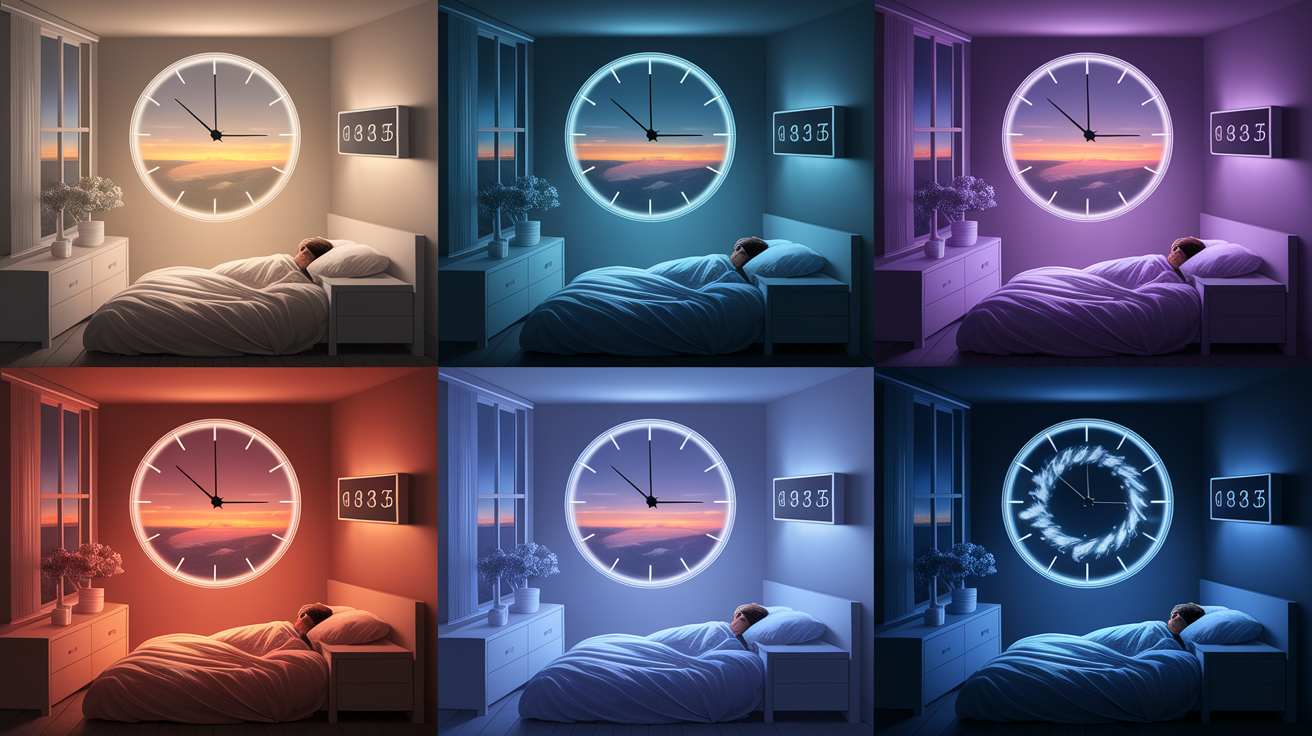
This remarkable system operates through complex molecular mechanisms involving special clock genes and proteins. Two key players in this process are proteins called CLOCK and BMAL1, which work together in a self-regulating feedback loop that maintains your approximately 24-hour cycle.
The most noticeable effect of your circadian rhythm is its influence on your sleep-wake cycle. Here’s how it works:
- Your eyes detect light and send signals to the SCN
- The SCN processes this information and sends signals to other brain regions
- These signals trigger changes in hormone production, body temperature, and other factors that make you feel alert or sleepy
- As darkness falls, your body begins preparing for sleep
- As morning approaches, your body prepares to wake up
Interaction Between Circadian Rhythms and Sleep Homeostasis
Your sleep isn’t controlled by circadian rhythms alone. Instead, it’s governed by two interacting processes that sleep scientists refer to as the two-process model of sleep regulation:
Process C: The Circadian Timing System
Process C is your circadian rhythm—the roughly 24-hour cycle that promotes wakefulness during daylight hours and sleep during darkness. This system doesn’t control how much sleep you need but rather when that sleep ideally should occur.
Process S: Sleep Homeostasis
Process S represents your sleep pressure—the growing need for sleep that builds the longer you stay awake. Think of it as a sleep debt that accumulates during wakefulness and gets repaid during sleep.
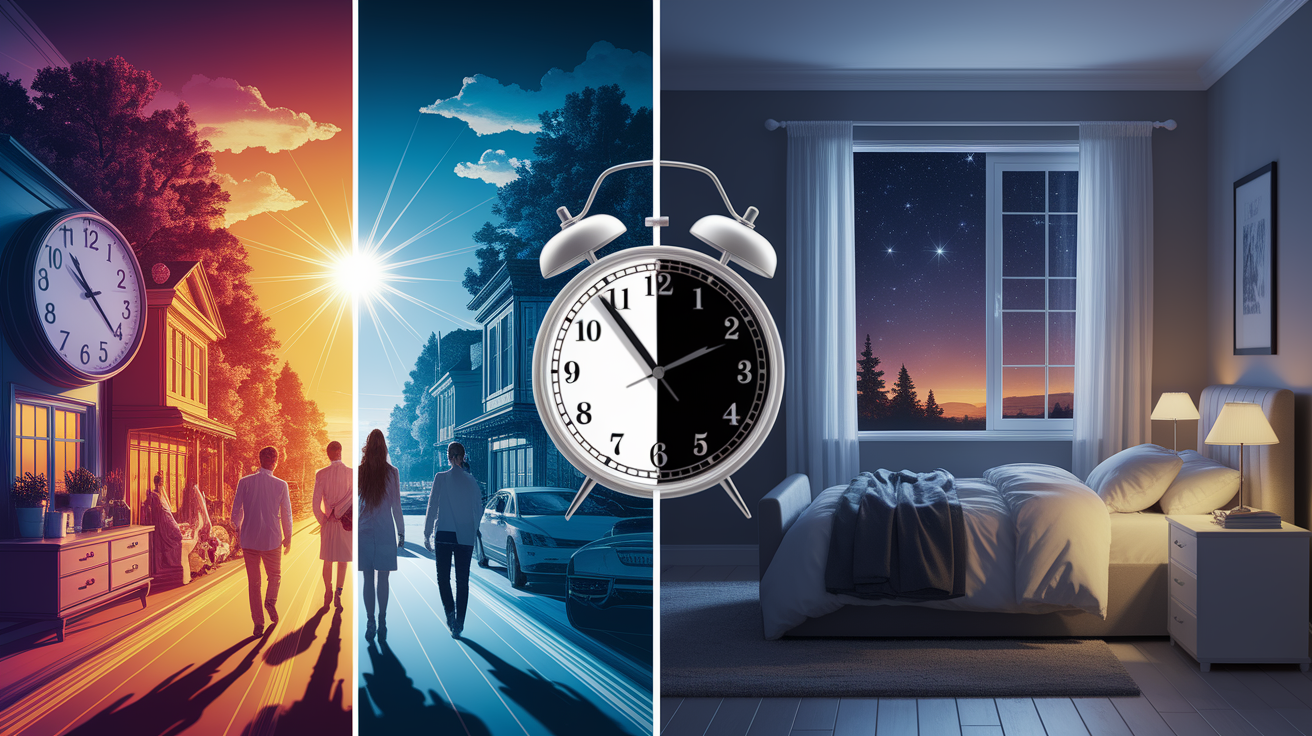
These two processes work together like this:
- While you’re awake, sleep pressure (Process S) gradually builds up
- Your circadian system (Process C) counteracts this growing sleepiness during the day
- In the evening, as your circadian alerting signal decreases and sleep pressure peaks, you begin feeling sleepy
- During sleep, your sleep pressure dissipates while your circadian system prepares your body for the morning
This elegant interaction determines not just when you sleep, but also affects your sleep architecture—including how much time you spend in different sleep stages like REM and deep sleep.
Physiological Changes Driven by Circadian Rhythms
Your circadian clock triggers numerous physiological changes throughout the day that prepare your body for either sleep or wakefulness. Understanding these changes helps explain why sleep quality suffers when your internal clock is misaligned with your actual sleep schedule.
The Melatonin Cycle
Melatonin is often called the “sleep hormone,” and for good reason. This crucial hormone is produced by your pineal gland under the control of the SCN. Its production follows a distinct pattern:
- Melatonin levels remain low during daylight hours
- Production begins increasing in the evening (typically around 9 PM)
- Levels peak in the middle of the night
- Production decreases as morning approaches
This melatonin rhythm serves as a signal to your body that it’s nighttime and helps initiate the sleep process. However, artificial light—especially blue light from screens—can suppress melatonin production and delay sleep onset.
Body Temperature Regulation
Your core body temperature also follows a circadian pattern that facilitates sleep:
- Temperature rises throughout the day, promoting alertness
- It begins dropping in the evening, helping trigger sleepiness
- Your temperature reaches its lowest point (nadir) in the early morning hours
- It begins rising again, helping you wake up
This temperature drop at night creates optimal conditions for sleep, as your body needs to cool down slightly to initiate and maintain good quality sleep.
Other Hormonal Changes
Several other hormones follow circadian patterns, including:
- Cortisol: This “stress hormone” peaks in the morning to help you wake up and gradually declines throughout the day
- Growth hormone: Released primarily during deep sleep
- Insulin: Your body’s sensitivity to insulin changes throughout the day, affecting metabolism
Disruptions in Circadian Rhythms and Sleep Disorders
When your circadian rhythm falls out of sync with your actual sleep-wake schedule, sleep problems often follow. Several common situations can disrupt your biological clock:
Jet Lag and Travel
When you travel across time zones, your internal clock remains synchronized to your original time zone until it can adjust to the new light-dark cycle. This mismatch results in the familiar symptoms of jet lag:
- Difficulty falling asleep or staying asleep
- Daytime fatigue and reduced alertness
- Impaired cognitive performance
- Digestive issues
Generally, it takes about one day per time zone crossed for your circadian system to fully adjust.
Shift Work
People who work night shifts or rotating shifts face a particular challenge, as they must often sleep during daylight hours and remain alert at night—directly opposing their natural circadian rhythm. This can lead to shift work sleep disorder, characterized by insomnia, excessive sleepiness, and increased risk of accidents.
Circadian Rhythm Sleep Disorders
Some people have medical conditions involving their circadian timing system, including:
- Delayed sleep phase disorder: A persistent pattern of late sleeping and waking
- Advanced sleep phase disorder: Habitually falling asleep and waking extremely early
- Irregular sleep-wake rhythm: No consistent pattern of sleep and wakefulness
- Non-24-hour sleep-wake rhythm: A progressively shifting sleep pattern
Interestingly, genetic variations can influence these disorders. Research has identified mutations in clock genes like CRY1 that can alter circadian period length, potentially contributing to sleep timing problems.
Effects of Modern Lifestyle
Our modern 24/7 lifestyle creates numerous challenges to maintaining healthy circadian rhythms:
- Artificial lighting extending our days
- Screen time before bed suppressing melatonin
- Inconsistent sleep schedules between weekdays and weekends
- Indoor lifestyles reducing exposure to natural light cues
Maintaining Healthy Circadian Rhythms
The good news is that you can take specific steps to support your circadian health and improve your sleep. Here are research-backed strategies:
Light Management
Since light is the primary synchronizer of your circadian clock, managing your light exposure is crucial:
- Get bright light exposure in the morning (ideally natural sunlight) to help reset your circadian clock daily
- Maximize daylight exposure throughout the day
- Reduce bright light exposure in the evening, especially blue light from screens
- Make your bedroom as dark as possible for sleeping
Consistent Sleep Schedule
One of the most powerful ways to maintain circadian health is keeping consistent sleep and wake times—even on weekends. This helps reinforce your body’s natural rhythm and improves both sleep quality and daytime alertness.
Strategic Timing of Activities
Align other activities with your circadian biology:
- Exercise: Earlier in the day is generally better, as evening exercise can delay sleep for some people
- Meals: Try to eat on a regular schedule and avoid large meals close to bedtime
- Caffeine: Consume earlier in the day, as its effects can last 6+ hours
- Naps: Short early afternoon naps can be beneficial without disrupting nighttime sleep
These adjustments help strengthen your natural sleep-wake timing and promote better overall sleep quality.
Conclusion: Harmonizing with Your Internal Clock
Your circadian rhythm is an extraordinary biological system that has profound effects on your sleep, health, and daily functioning. By understanding how this internal clock works and taking steps to support its natural rhythms, you can enjoy better sleep quality, improved daytime alertness, and potentially better long-term health.
Working with your circadian biology rather than against it means respecting the power of light, consistency, and timing in your daily habits. Small adjustments to align your lifestyle with your internal clock can yield significant improvements in how you feel both day and night.
Remember that while circadian disruptions are common in our modern world, your body’s clock is remarkably adaptable. With the right environmental cues and behavioral patterns, you can help your internal timekeeper maintain its natural, healthy rhythm—and reap the benefits of truly restorative sleep.