
Quick Answer: Visual cues like color, shape, and presentation dramatically influence how we perceive taste, often overriding the actual chemical signals from our taste buds. This phenomenon, known as “eating with our eyes first,” demonstrates how our brain integrates multiple sensory inputs to create our overall flavor experience, making food appearance nearly as important as its actual taste.
The Power of Sight in Taste Perception
Have you ever wondered why we’re drawn to beautifully presented dishes or why food photographers spend so much time perfecting their shots? The answer lies in the fascinating relationship between our eyes and taste buds. Research shows that vision often dominates other senses when it comes to flavor perception.
This powerful connection explains several everyday phenomena:
- Why professional chefs prioritize food presentation
- Why food advertising relies heavily on visual appeal
- How restaurants use lighting and plating to enhance dining experiences
The visual cortex in our brain processes what we see and communicates with areas responsible for taste perception before food even touches our tongue. This pre-tasting assessment creates expectations that significantly influence the actual flavor experience that follows.
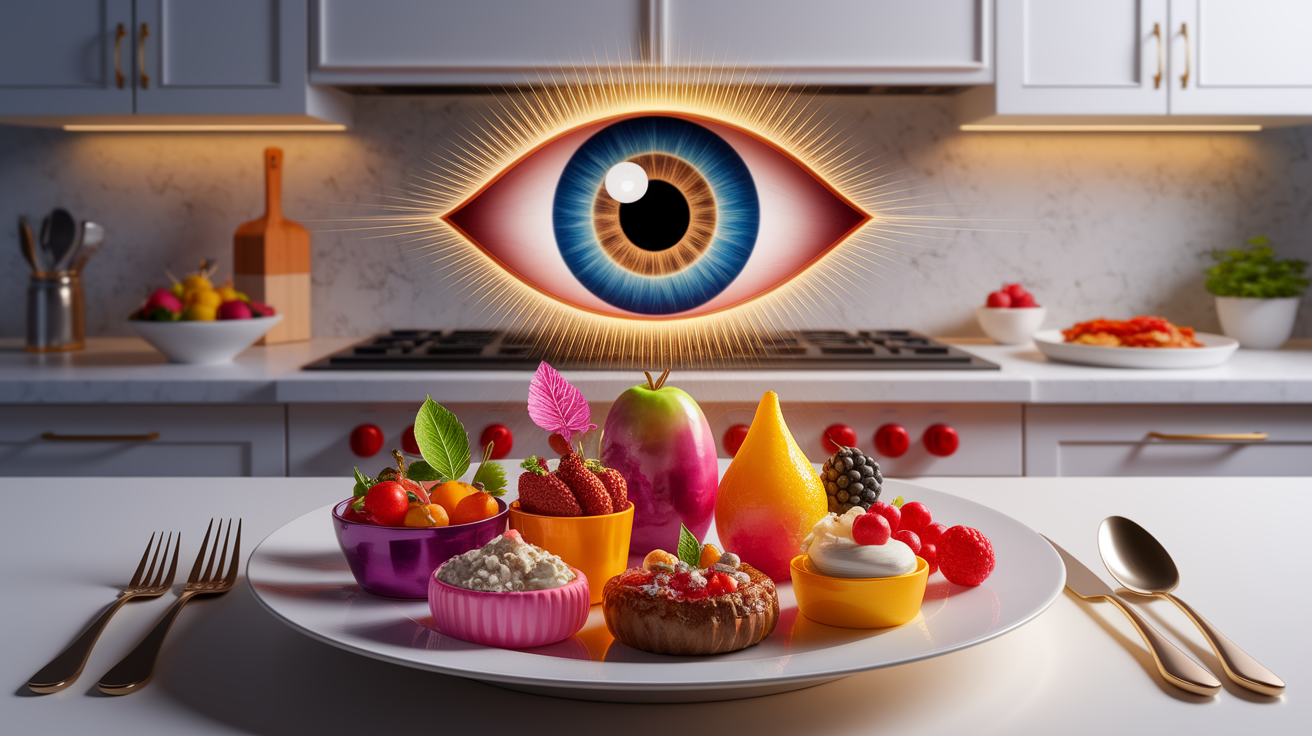
Consider the last time you bit into a perfectly ripe strawberry. Your brain had already prepared for sweetness based on its vibrant red color. This sensory integration happens automatically and shapes our entire eating experience.
Color and Its Impact on Taste
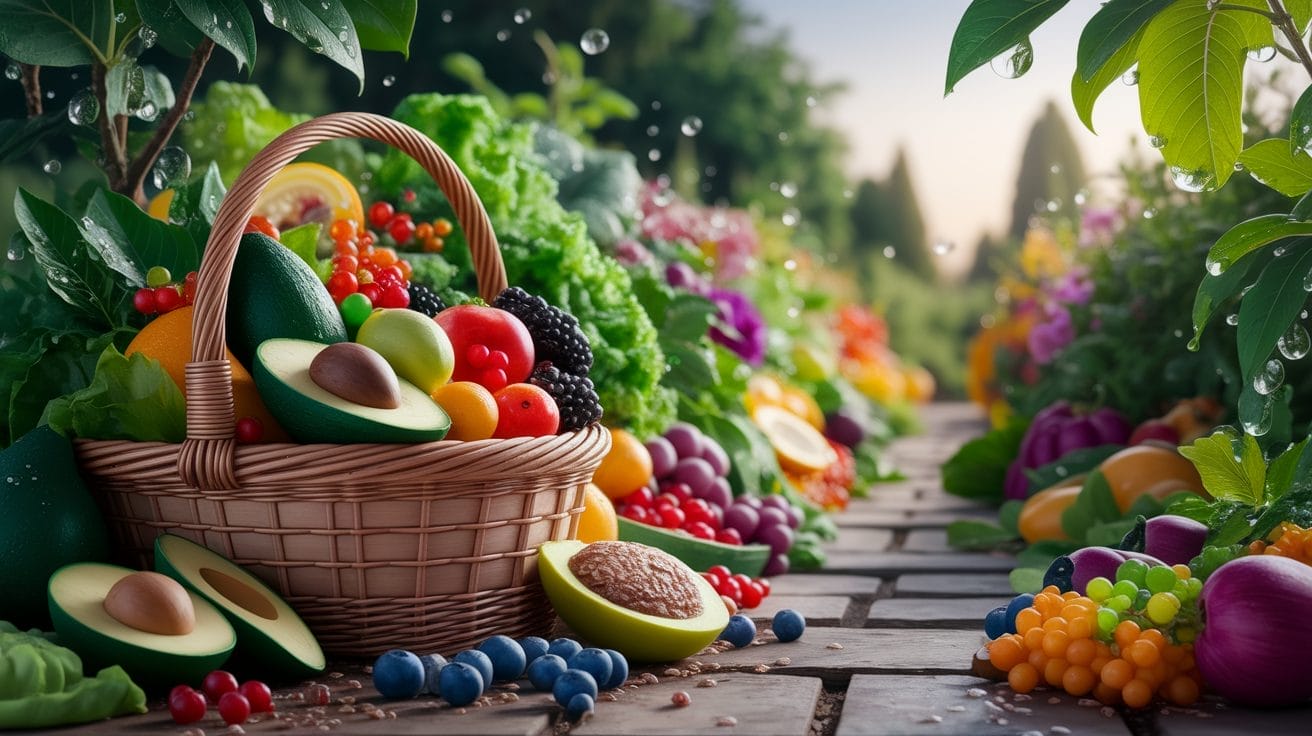
Color is perhaps the most studied and influential visual factor affecting taste perception. Studies in food color psychology have revealed consistent associations between specific colors and taste expectations:
- Red and pink: Associated with sweetness (think strawberries and watermelon)
- Green and yellow: Linked to sourness (like lemons and limes)
- Brown and black: Connected to bitterness (coffee, dark chocolate)
- Blue: Often perceived as unappetizing (rare in natural foods)
These associations are so powerful that they can override actual taste. In one famous experiment, participants were given identical vanilla puddings with different food colorings. The yellow-colored pudding was perceived as having a stronger lemon flavor, while the red pudding tasted “fruitier” – despite all samples having identical chemical composition.
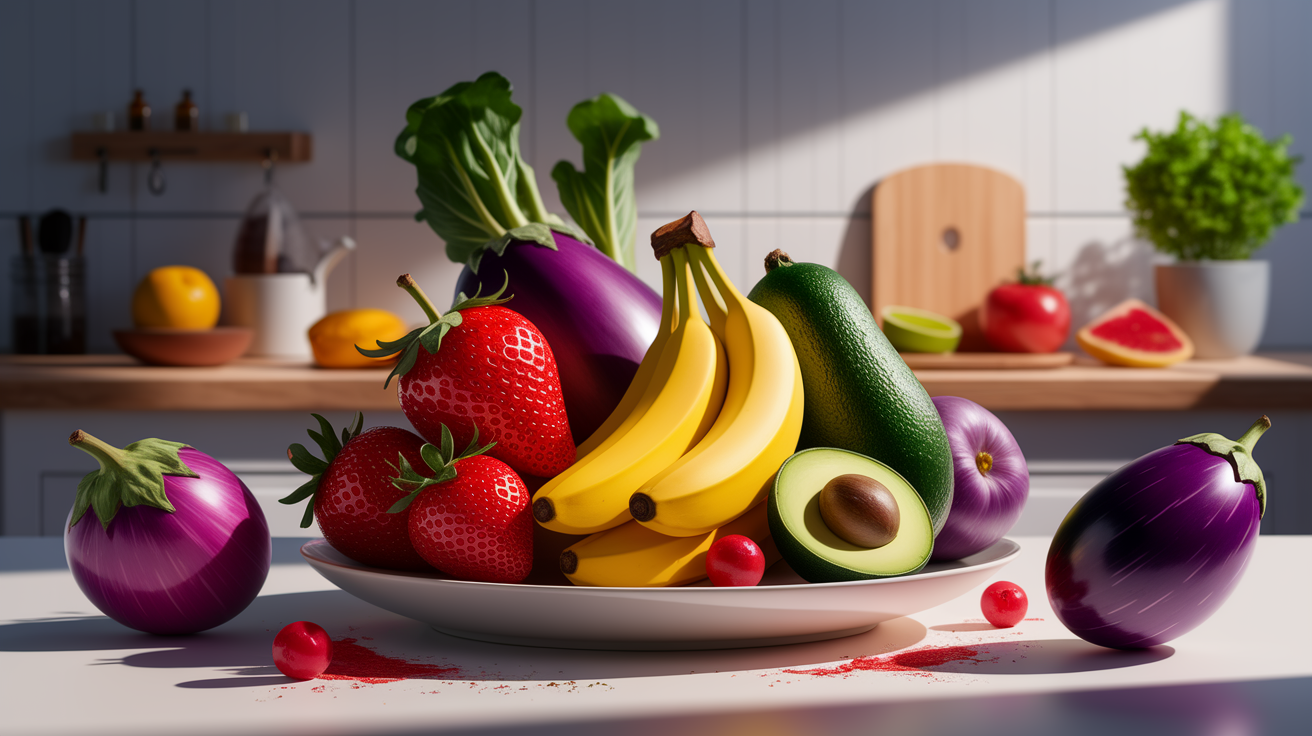
The properties of color also matter significantly. Research demonstrates that:
- More saturated colors enhance perceived tastiness and flavor intensity
- Less saturated colors are typically associated with healthiness
- Brightness can influence perceived freshness and quality
This explains why food manufacturers carefully select packaging colors and why restaurants pay such close attention to lighting – both directly influence how you’ll perceive their food’s taste.
Shape Matters: How Form Affects Flavor
It’s not just color that affects our taste perception – the shape of food and its packaging plays a crucial role too. Studies on visual flavor cues have uncovered fascinating shape-taste associations:
- Rounded shapes: Associated with sweetness
- Angular shapes: Connected to sourness, bitterness, or saltiness
- Symmetrical forms: Often perceived as more appealing and tastier
These shape-taste associations explain why chocolatiers create rounded pralines for sweet fillings but angular pieces for intense dark chocolate. Similarly, yogurt packaging tends to feature curved designs to emphasize creaminess, while sour candies often come in irregular, jagged forms.

The influence extends to tableware too. Studies show that:
- Food served on round plates is often rated as sweeter
- Angular plates can enhance bitter flavor notes
- The weight and texture of cutlery can alter perceived flavor quality
This crossmodal correspondence between shape and taste demonstrates the complex interconnections in our sensory processing system. Our brain links certain visual forms with specific taste qualities through learned associations, creating expectations that shape our actual tasting experience.
The Psychological Mechanisms Behind Visual Influence
How exactly do visual cues exert such power over our taste perception? The answer lies in several sophisticated psychological processes:
Expectation Formation
Visual information creates anticipatory signals in the brain that prepare the sensory system for certain tastes. Neurogastronomy research shows that these expectations can enhance or diminish the perceived flavor, depending on whether the actual taste matches or contradicts what we expected.
Memory Activation
What we see triggers memories of past eating experiences. When you see a golden-brown cookie, your brain recalls previous encounters with cookies, activating taste memories before you take a bite. These memories prime your taste receptors and neural pathways to detect familiar flavor notes.
Sensory Integration
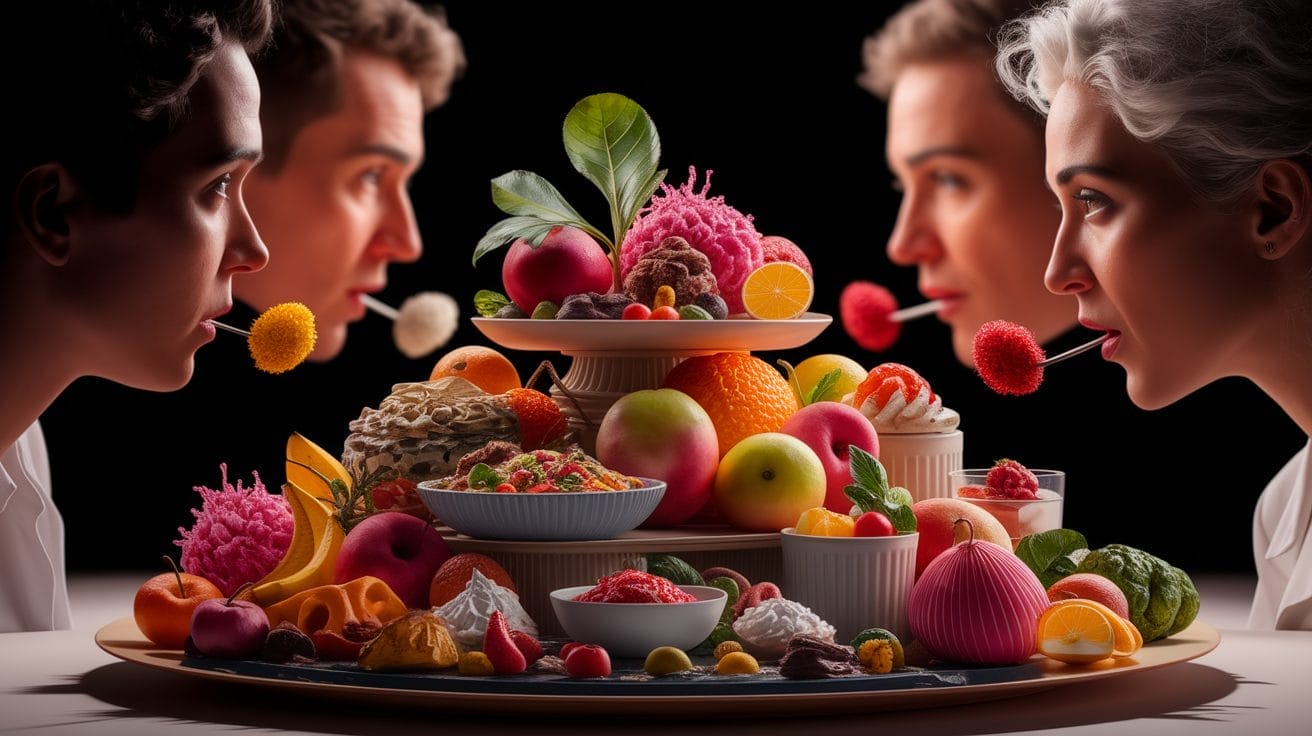
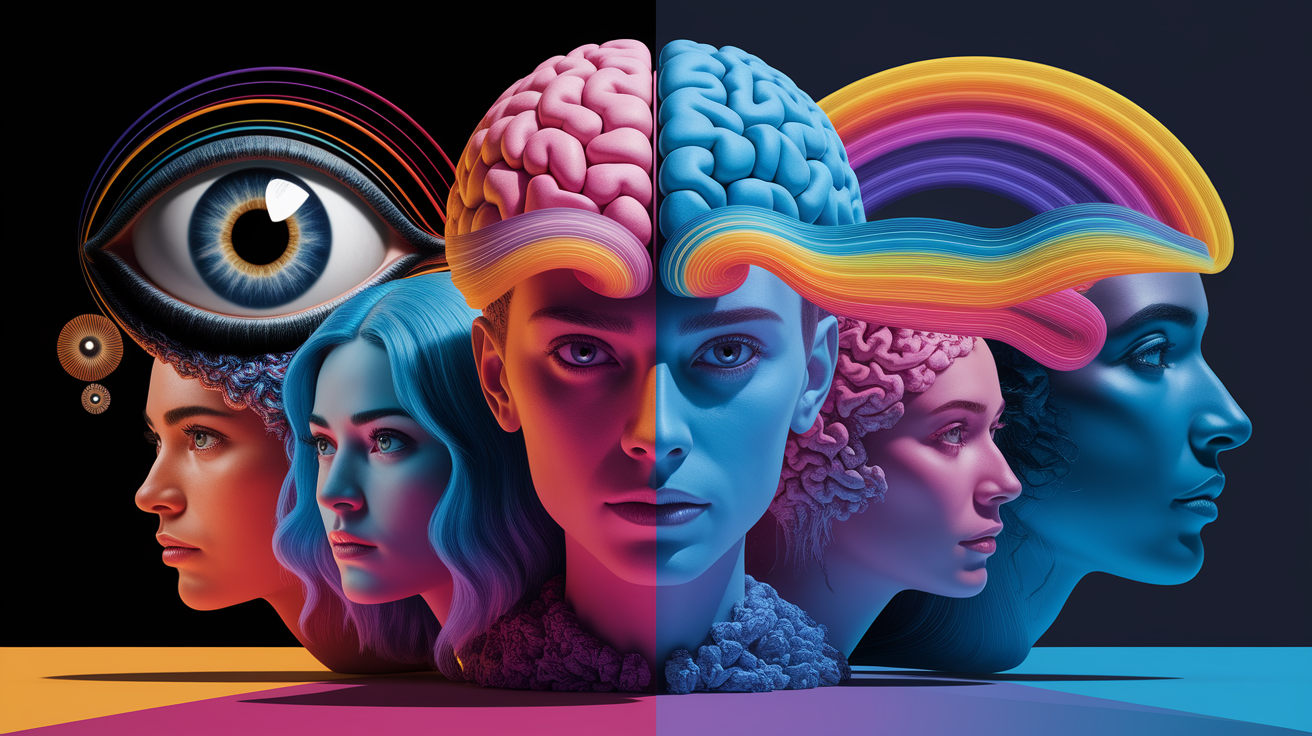
Taste perception isn’t just about taste buds – it’s a multisensory experience where the brain combines inputs from all senses. Visual information gets integrated with taste, smell, texture, and even sound to create a unified flavor perception.
The strength of these mechanisms explains why identical foods can taste different based on their appearance. Studies on sensory marketing have found that visual and verbal cues can bias taste perception to such a degree that consumers often cannot discriminate between similar flavors when visual differences are present.
Contextual Factors and Conditional Effects
The influence of visual cues on taste isn’t universal or constant – it depends on several contextual factors:
Environmental Context
The dining environment significantly affects how visual cues influence taste. Factors include:
- Lighting: Warm lighting enhances sweetness perception, while blue/cool lighting can enhance freshness perception
- Setting: The same food tastes different in a fine restaurant versus a cafeteria
- Plate presentation: Artistic plating can enhance perceived flavor complexity
Individual Differences
Not everyone responds to visual cues in the same way. Variables include:

- Cultural background and learned associations
- Personal taste preferences and experiences
- Expertise (chefs and food critics may be less influenced by certain visual cues)
Food Type and Familiarity
The influence of visual cues varies depending on the type of food and our familiarity with it:
- Novel foods are more susceptible to visual influence (we have fewer taste expectations)
- Highly processed foods may rely more on visual cues to signal flavor
- Traditional dishes carry strong visual-taste associations based on cultural experience
These conditional effects explain why scientific studies sometimes show mixed results regarding the influence of visual cues. The effect isn’t simple or universal—it’s complex and context-dependent, making the study of sensory integration a fascinating field.
Conclusion: The Art of Flavor Perception
Understanding how visual cues affect taste perception reveals that eating truly is a multisensory art form. What we see fundamentally shapes what we taste, often overriding the actual chemical composition of food.
This knowledge has profound implications for how we approach food:
- For home cooks: Simple plating techniques can enhance flavor perception
- For diners: Being aware of visual influence can deepen appreciation of culinary experiences
- For food producers: Packaging and presentation are not just marketing—they’re part of the flavor itself
The next time you enjoy a meal, remember that your eyes are tasting along with your tongue. By appreciating the intricate dance between vision and taste, you can enhance your sensory experience and develop a deeper connection with the food you eat.