
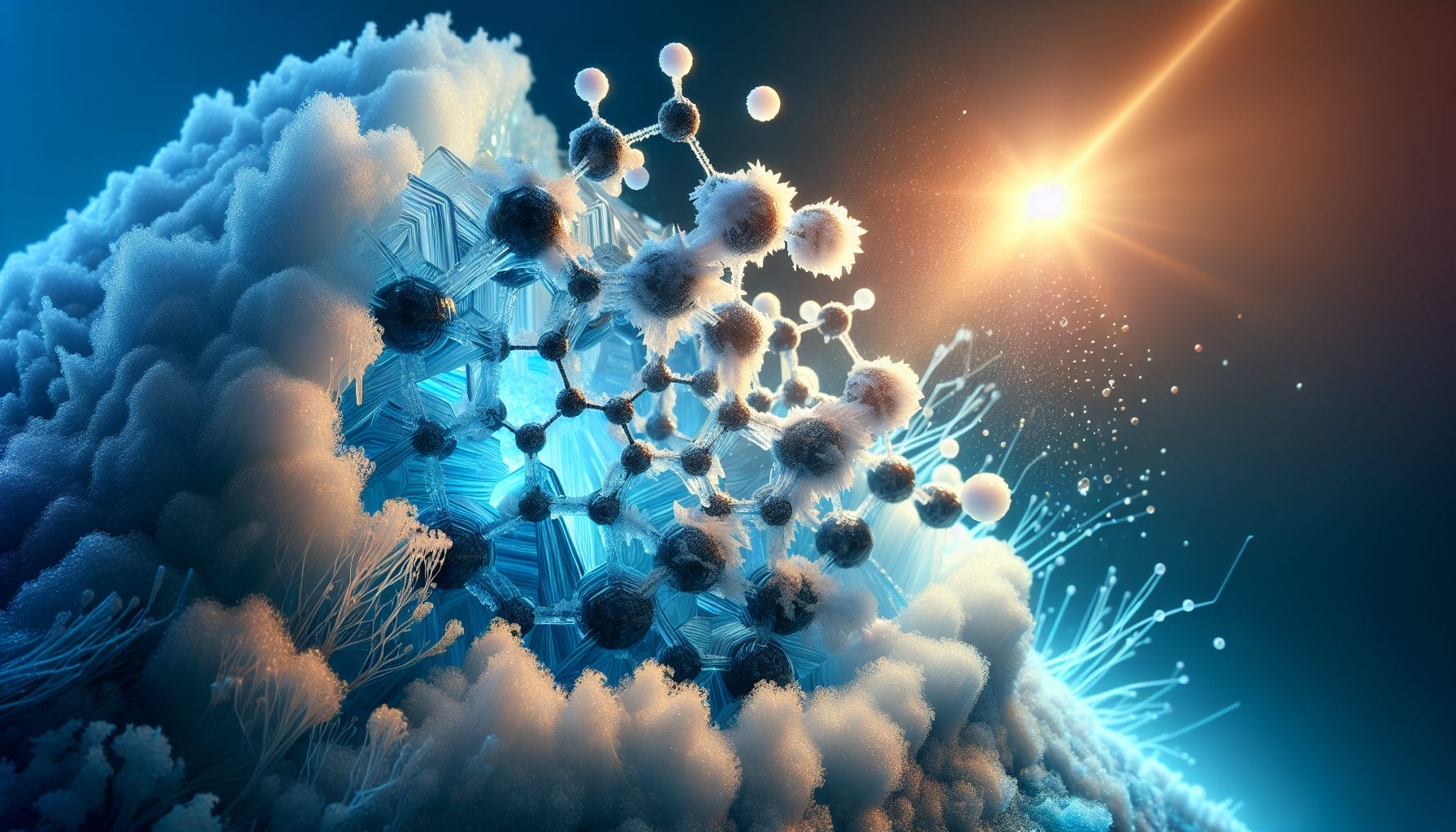
Quick Answer: Ice forms when water molecules slow down at low temperatures, allowing them to organize into a rigid crystalline structure through hydrogen bonding. At 0°C (32°F), these molecules arrange themselves into a hexagonal lattice pattern, creating the solid, less dense form we know as ice.
Introduction – The Magic Moment Water Becomes Ice
Have you ever wondered about that magical moment when liquid water transforms into solid ice? It’s a fascinating process that happens countless times around us—in our freezers, on winter ponds, and high in the atmosphere where snowflakes form. This everyday phenomenon involves an intricate molecular ballet that’s both beautiful and vital to life on our planet.
Water is one of the few substances that expands when it freezes, making ice less dense than liquid water—a quirky property with profound implications for our world. Let’s dive into the captivating science behind how those flowing water molecules lock into place to create the crystalline structure we call ice.
The Molecular Dance – How Water Molecules Transform
To understand ice formation, we need to look at what happens at the molecular level when water cools.
Hydrogen Bonds: The Glue That Binds
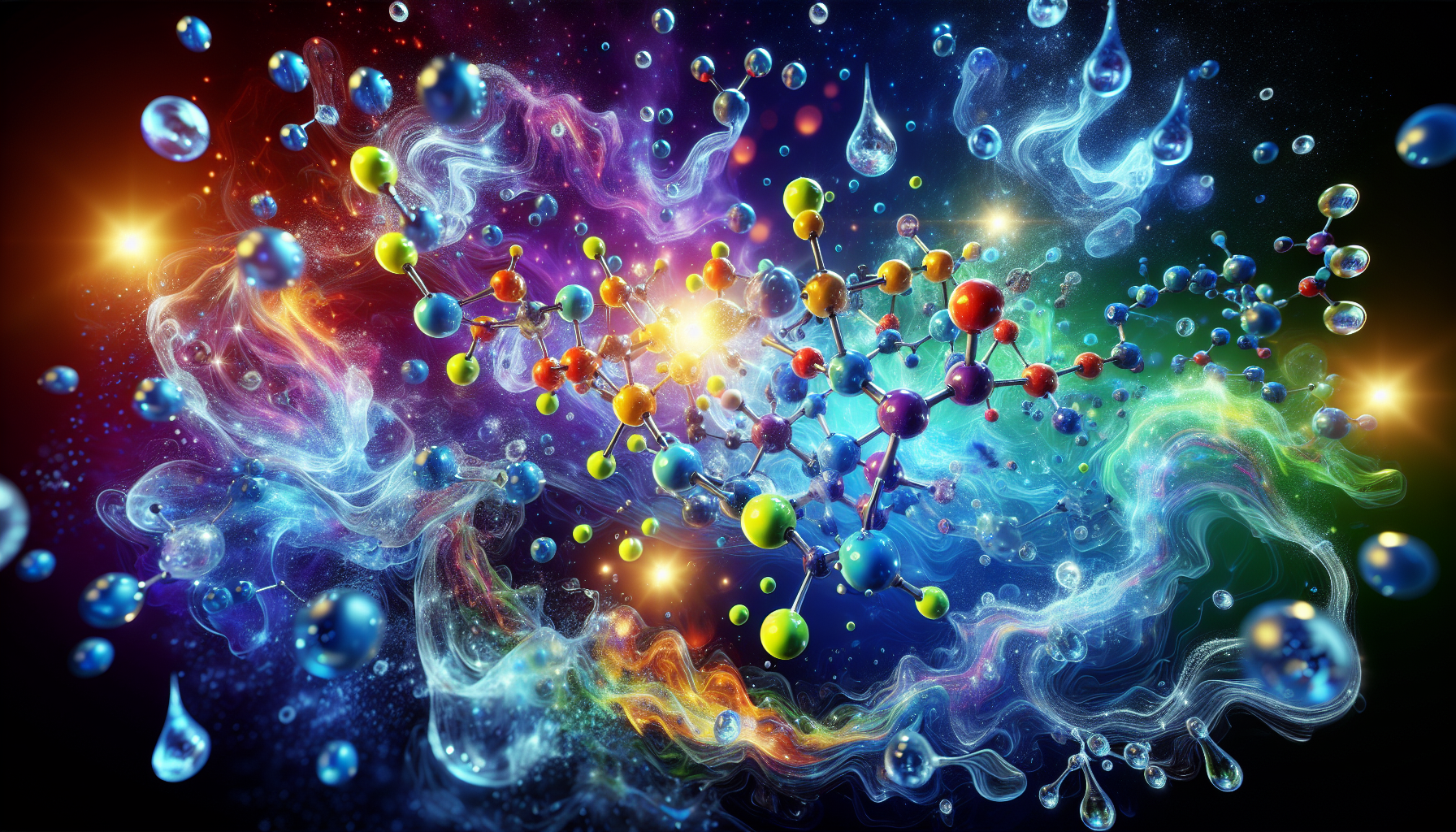
Water molecules (H₂O) consist of one oxygen atom bonded to two hydrogen atoms. What makes water special is how these molecules interact with each other through hydrogen bonds—weak attractive forces between the oxygen atom of one molecule and the hydrogen atoms of another.
In liquid water, molecules move freely while constantly forming, breaking, and reforming hydrogen bonds. But as temperature decreases, something remarkable happens:
- Water molecules lose thermal energy and slow down
- Their reduced movement allows hydrogen bonds to last longer
- Molecules begin organizing into ordered clusters
- At 0°C, they arrange into a rigid, open structure
The Hexagonal Pattern
When water fully freezes, its molecules lock into a hexagonal crystalline structure known as ice Ih (pronounced “ice one h”). In this configuration, each water molecule forms hydrogen bonds with exactly four neighboring molecules.
This hexagonal arrangement creates open spaces in the ice structure, making it less dense than liquid water—explaining why ice floats! If ice sank, lakes would freeze from the bottom up, with profound consequences for aquatic life.
Nucleation – The Birth of Ice Crystals
Before water can transform fully into ice, it needs somewhere to start—this is called nucleation.
Seeds of Crystallization
Nucleation is the birth of tiny ice embryos that serve as templates for crystal growth. This process comes in two forms:
- Homogeneous nucleation: Forms spontaneously in pure water when random molecular motions create small ice-like structures
- Heterogeneous nucleation: Forms on existing surfaces like dust particles, container walls, or other impurities
For an ice crystal to grow, these embryonic structures must reach a critical size. Until then, they’re unstable and may dissolve back into liquid. This energy barrier explains why pure water doesn’t instantly freeze at exactly 0°C.
Crystal Growth Patterns
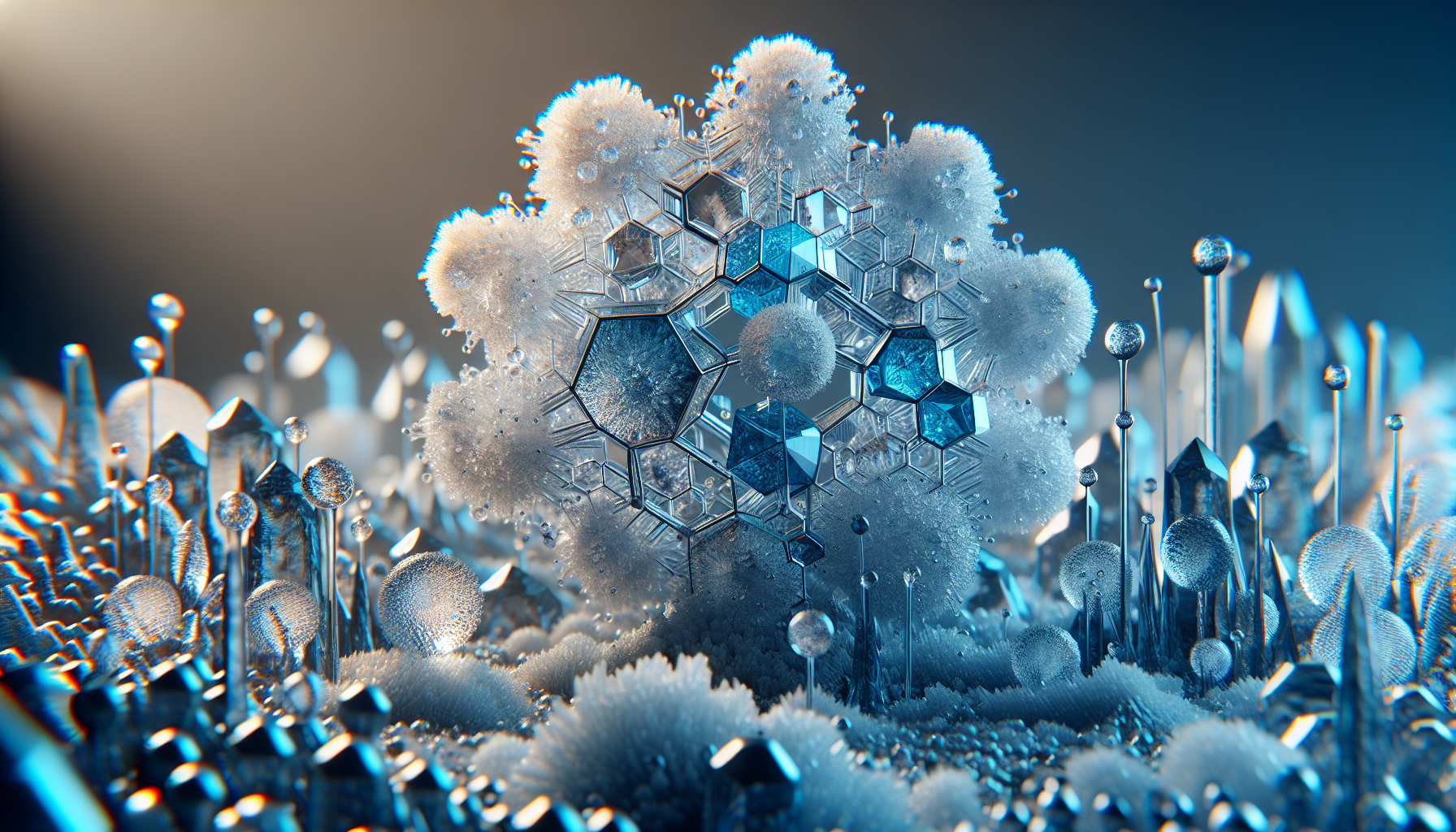
Once a stable nucleus forms, it grows as more water molecules attach themselves in specific preferred directions. This directional growth explains why ice crystals often form beautiful patterns:
- Flat, plate-like crystals in certain temperature ranges
- Needle-like projections in others
- The familiar six-sided snowflakes we associate with winter
The growth rate depends on how quickly heat can be removed from the freezing site and how easily new water molecules can diffuse to the growing crystal surface.
Supercooling and Phase Changes
When Water Gets Colder Than Freezing
Surprisingly, water doesn’t always freeze at 0°C. Pure water without nucleation sites can be supercooled to temperatures well below freezing while remaining liquid. This metastable state exists because without a nucleus, the water molecules can’t organize into the crystalline structure of ice.
Supercooled water is common in nature, particularly in high-altitude clouds where tiny water droplets remain liquid at temperatures as low as -40°C. But introduce a disturbance or nucleation site, and these droplets will freeze almost instantly!
Latent Heat of Fusion
When water freezes, it releases energy in the form of heat—called the latent heat of fusion. This energy release explains why:
- Water stays at 0°C while freezing, even as you continue removing heat
- Freezing water can actually warm surrounding air
- Fruit growers sometimes spray water on crops before a frost (the heat released during freezing helps protect the plants)
This phase change represents a fundamental balance between the energy states of liquid and solid water.
Environmental Influences on Ice Formation
The freezing process varies dramatically depending on environmental conditions.
Bodies of Water
In lakes and ponds, ice forms in a specific way due to water’s unique density properties:
- Water is densest at 4°C
- As surface water cools below 4°C, it becomes less dense and stays on top
- This explains why lakes freeze from the top down, protecting aquatic life below
In turbulent conditions, like flowing rivers, tiny ice crystals called frazil ice form throughout the water column before collecting at the surface.
Saltwater Freezing
Oceans and salt water follow different rules. As sea ice forms, salt is excluded from the crystalline structure, creating concentrated brine channels within the ice. This salt exclusion:
- Lowers the freezing point of seawater (to around -2°C)
- Creates a more complex ice structure than freshwater ice
- Forms habitat niches for specialized microorganisms
Impurities and Pressure Effects
Various factors can dramatically change how water freezes:
- Dissolved substances like salt or sugar lower the freezing point
- Increased pressure typically lowers water’s freezing point
- Impurities provide nucleation sites that can trigger freezing at higher temperatures
Conclusion – The Fascinating Journey from Water to Ice
The transformation of water to ice reveals nature’s elegant organizational principles. From the molecular dance of hydrogen bonds to the growth of elaborate crystals, ice formation demonstrates how simple interactions lead to beautiful complexity.
Next time you drop ice cubes into your drink or see frost patterns on your window, take a moment to appreciate the microscopic ballet that makes it all possible—water molecules slowing down, aligning, and locking together in their hexagonal dance.
This everyday miracle of phase change connects us to fundamental principles of physics and chemistry that shape our world in countless ways.