

Quick Answer: Tears serve multiple vital functions—from protecting our eyes to releasing stress hormones and signaling our emotional states to others. When we cry, our bodies are engaging in a complex physiological process that helps maintain ocular health, reduce emotional tension, and even communicate our feelings to those around us.
The Purpose of Tears
Have you ever wondered why humans are the only creatures on Earth that shed emotional tears? It’s one of our most fascinating physiological responses, serving both practical and psychological functions.

Tears serve three distinct purposes, each corresponding to a different type of tear:
- Protection and lubrication: Basal tears continuously coat our eyes with a thin protective film that keeps them moist, nourished, and clear of debris.
- Defense against irritants: Reflex tears rush in when something threatens our eyes, like smoke, dust, or the notorious onion vapors.
- Emotional expression: Perhaps most intriguingly, emotional tears flow in response to feelings ranging from profound sadness to overwhelming joy.
This last category—emotional tears—is particularly unique to humans and serves as a powerful social signal. When we cry emotionally, we’re often communicating that we need support, comfort, or connection with others.
The Biology of Crying
When emotions surge, a remarkable biological cascade begins in your body. The process starts in your brain and ends with tears streaming down your face—all orchestrated by an intricate system of glands, nerves, and hormones.
How Tears Are Produced
The tear production system works like a miniature waterworks facility above your eyes:
- The producers: Lacrimal glands, located just above each eye, manufacture tears.
- The distribution network: Small ducts deliver these tears across your eye surface.
- The drainage system: Tiny drainage canals collect excess tears at the inner corners of your eyes, directing them into your nasal cavity (explaining why your nose often runs when you cry).
During emotional crying, your body produces tears faster than they can drain away, causing the overflow that streams down your cheeks.
The Brain-Tear Connection
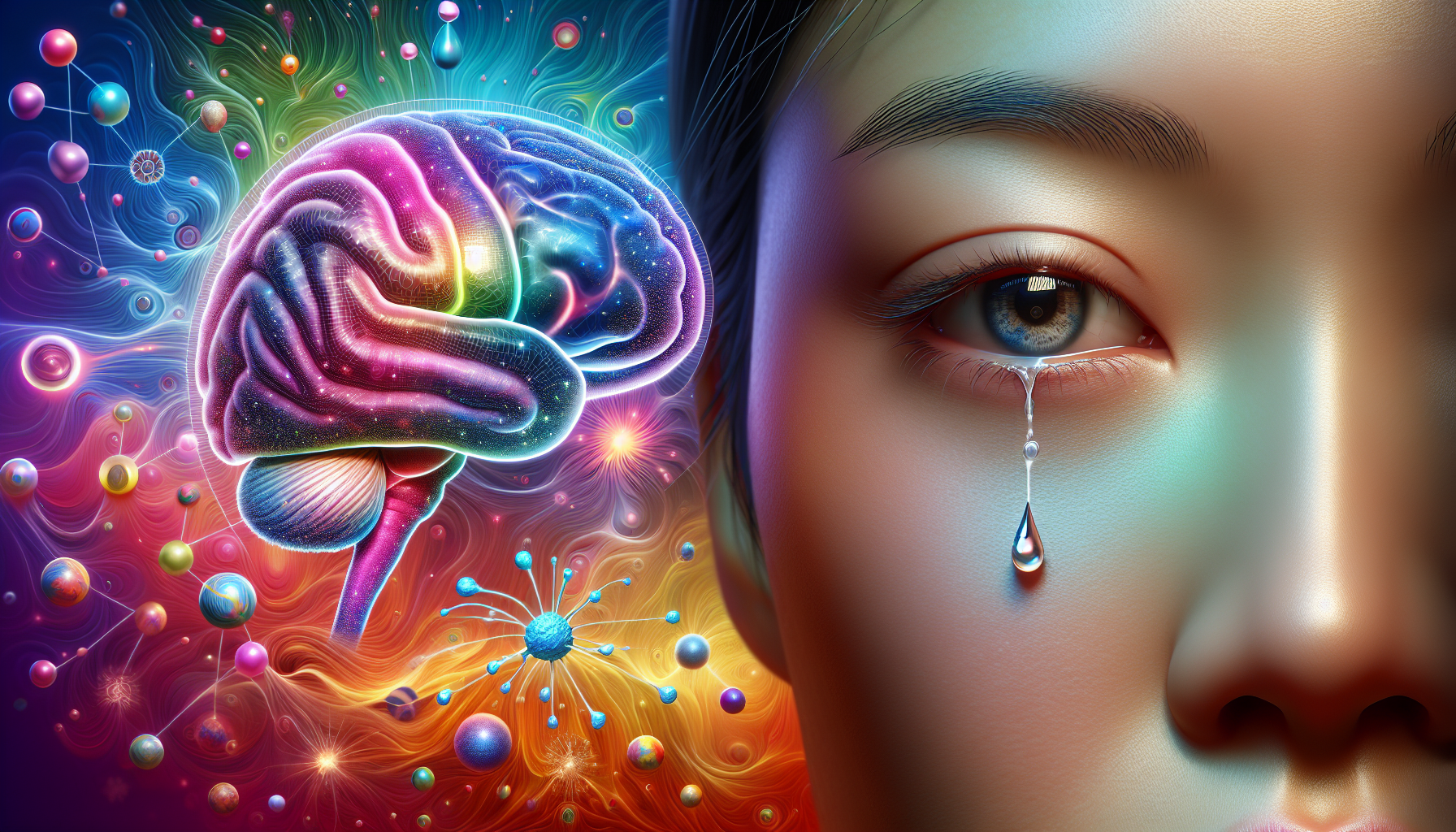
Your tears don’t flow randomly—they’re directed by a sophisticated brain network:
- The amygdala processes your emotions
- The anterior cingulate cortex helps you notice your feelings
- The hypothalamus serves as a command center
- The parasympathetic nervous system, particularly the vagus nerve, triggers your lacrimal glands
This neuronal highway explains why we can cry from such a wide range of emotions—each feeling travels along similar pathways to ultimately reach our tear glands.
Chemical Composition of Emotional Tears
What makes a tear a tear? While they might look like simple droplets of water, tears are actually a complex cocktail of proteins, enzymes, hormones, and electrolytes.
Surprisingly, emotional tears have a distinctive chemical composition compared to other types:
- Higher protein content: Making them more viscous and visible—a natural way to signal distress to others
- Stress hormones: Including adrenocorticotropic hormone (ACTH) and prolactin
- Pain-relieving compounds: Like leucine-enkephalin, a natural painkiller
- Minerals: Including potassium and manganese in higher concentrations
The Biochemistry of Emotional Release
When we cry emotionally, our tears may actually help flush stress chemicals from our bodies. This biochemical purge could explain why many people report feeling better after “a good cry.” The process also triggers the release of endorphins and oxytocin—natural mood elevators that promote feelings of well-being and social bonding.
Think of crying as your body’s pressure-release valve: when emotional tension builds up beyond a certain threshold, tears help return your system to balance.
The Evolutionary and Psychological Aspects of Crying
Why did humans develop the ability to shed emotional tears? This unique trait appears to serve important social and psychological functions.
The Development of Emotional Tears
Researchers suggest that emotional tears likely developed as a social signal system. Before language was sophisticated, visible tears could clearly communicate distress to others in the social group, prompting care and assistance.
Interestingly, some theories propose that emotional tears may have originated from reflexive responses to smoke in early human groups who used fire. What began as a physical protection mechanism may have gradually transformed into a social signaling system.
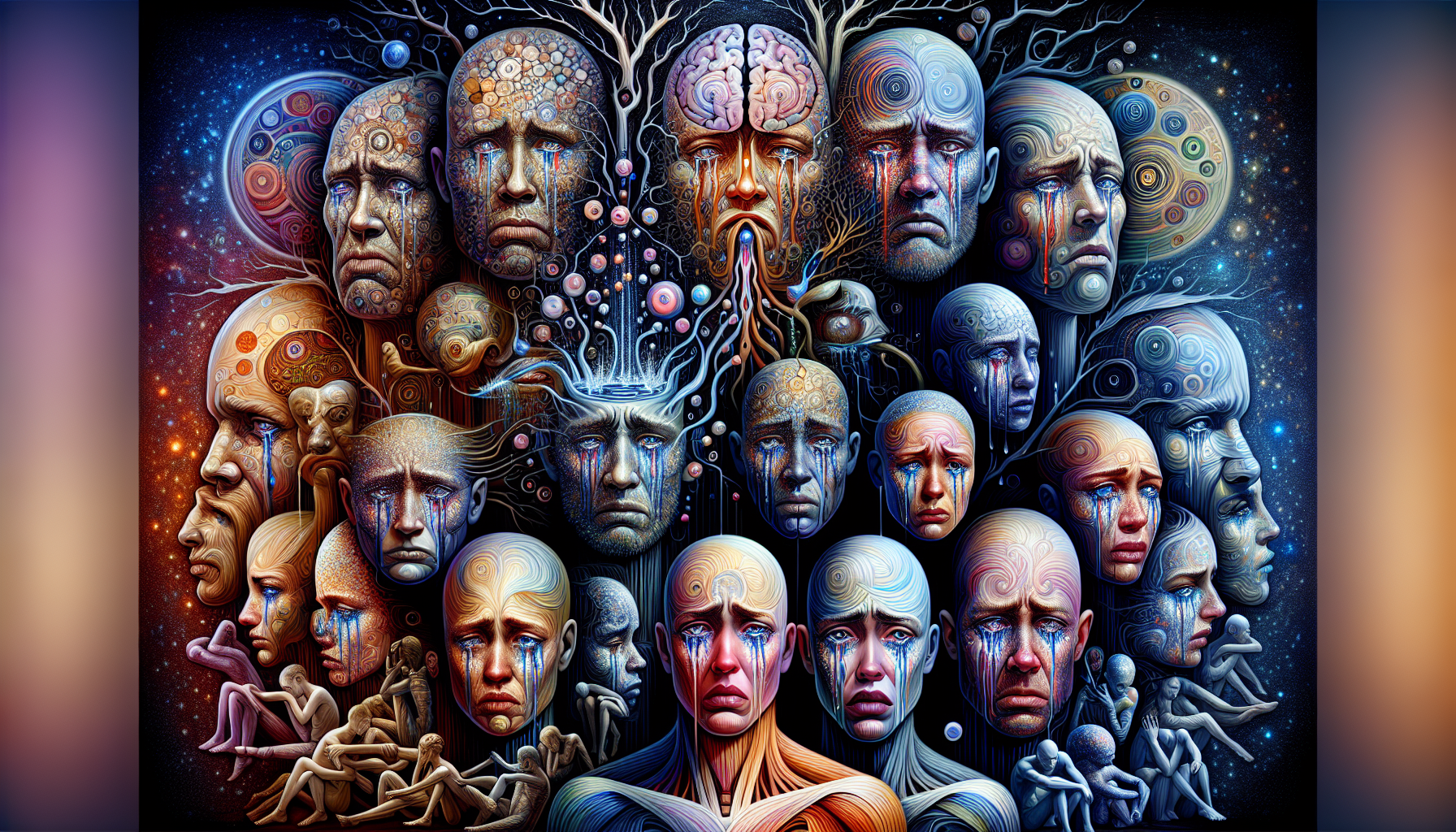
Psychological Thresholds and Variations
Not everyone cries with the same frequency or intensity. Research shows significant variations based on:
- Gender: In many cultures, women typically cry more frequently than men, though this appears strongly influenced by social conditioning rather than biological differences.
- Cultural norms: Societies differ dramatically in how acceptable they consider crying to be, especially for certain groups.
- Personal thresholds: Each person has a unique emotional threshold that, when exceeded, triggers tears.
Psychologically, crying serves as an emotional regulation mechanism. When feelings become overwhelming—whether joy, grief, or something in between—tears help process and externalize these intense sensations.
The Social Function of Tears
Tears aren’t just for the crier—they’re also powerful communication tools:
- They signal vulnerability and can elicit empathy from others
- They can strengthen social bonds through shared emotional experiences
- They communicate authentic emotion in a way that’s difficult to fake
This may explain why emotional tears contain more proteins than other types, making them more visible as they stream down the face—they’re designed to be seen.
Conclusion: The Healing Power of Tears
Far from being a sign of weakness, crying represents a sophisticated self-regulation mechanism that helps maintain emotional equilibrium. The biochemical composition of tears, the complex neural pathways involved, and the social signaling function all point to crying as an adaptive response that supports both individual well-being and community bonds.

The next time tears well up, remember: your body is engaging in a remarkable process that has served humans well throughout our existence. Those glistening drops carry stress hormones away, signal needs to others, and ultimately help restore emotional balance.
So go ahead—when you need to cry, let those tears flow. Your body knows exactly what it’s doing.