

Quick Answer: When cutting onions, we release a gas called syn-Propanethial-S-oxide that irritates our eyes. This chemical compound reacts with the moisture in our eyes to form a mild sulfuric acid, triggering our tear glands to flush out the irritant – a natural protective response.
The Tearful Truth
It’s a kitchen drama we’ve all experienced – the moment a knife slices through an onion, and suddenly tears are streaming down your face. This isn’t an emotional response to vegetable violence, but rather a fascinating chemical reaction at work!

The humble onion has developed a remarkable defense system. When an onion’s cells are damaged, they release compounds that create an irritating gas. This gas floats up to your eyes, causing that familiar stinging sensation and the waterworks that follow.
Unlike emotional tears, which contain stress hormones and natural painkillers, these “reflex tears” are simply your body’s way of protecting your eyes by washing away the irritant. It’s not harmful – just inconvenient and sometimes embarrassing when you’re cooking for guests!
The Chemical Reaction Unveiled
The scientific explanation for your onion-induced tears is a fascinating chain reaction:
- When you cut an onion, you damage its cells
- This damage releases an enzyme called lachrymatory-factor synthase and amino acid sulfoxides
- The enzyme converts these sulfoxides into sulfenic acid
- The unstable sulfenic acid quickly rearranges itself to form the volatile gas syn-Propanethial-S-oxide (the “lachrymatory factor”)
- This gas diffuses through the air and reaches your eyes
- When it contacts the moisture on your eyes, it forms a mild sulfuric acid
- This acid irritates nerve endings in your cornea
- Your brain signals your tear glands to produce tears to flush away the irritant
Interestingly, this two-step enzymatic reaction was only discovered in 2002 by Japanese researchers. Before that, scientists incorrectly thought another enzyme, alliinase, was solely responsible. The discovery of lachrymatory-factor synthase completed our understanding of this tear-inducing process.

The Irritant in Action
Syn-Propanethial-S-oxide is remarkably effective at its job. This gas is so potent that even tiny amounts can trigger a significant tearing response. When it reaches your eyes, it reacts with the moisture on your cornea, creating a mild acid that stimulates nerve endings. Your brain then immediately commands your lacrimal glands to produce tears to wash away the irritating compound.
This entire process happens in seconds – from knife slice to tears streaming – which is why cutting onions can so quickly turn from a mundane kitchen task to a weepy affair!
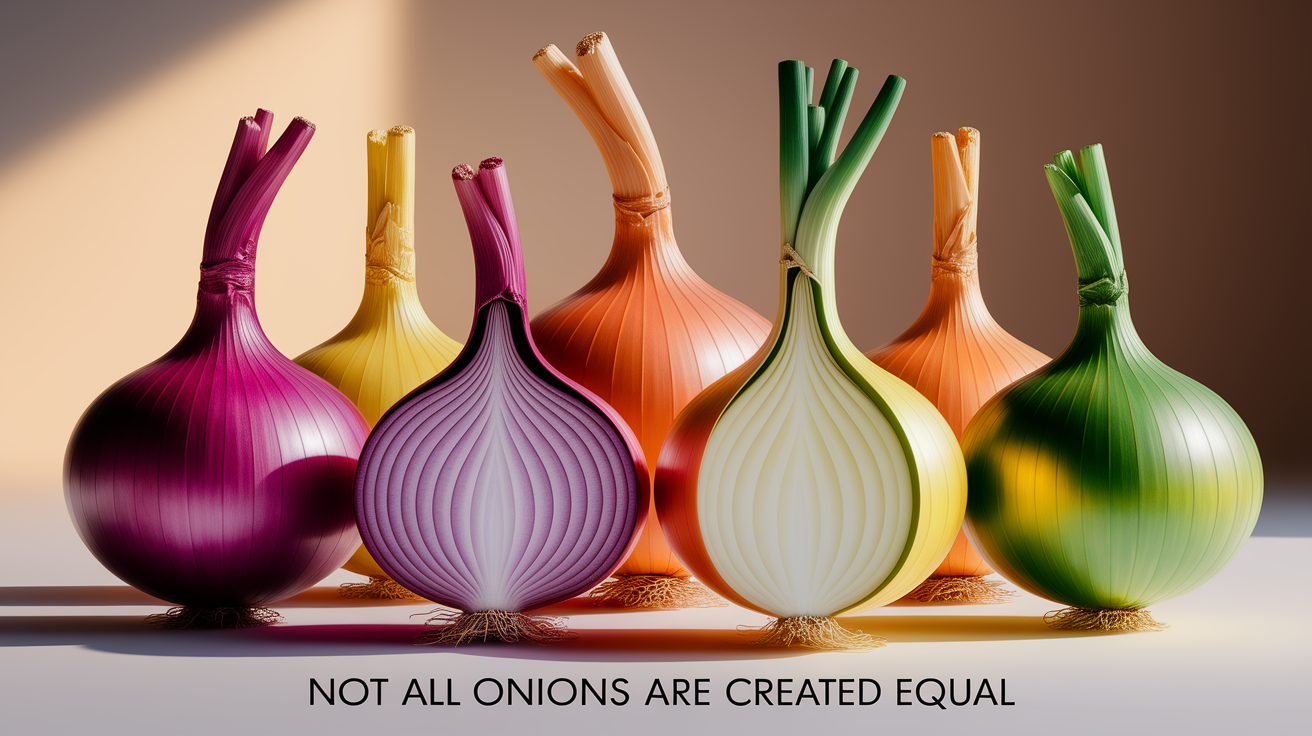
Not All Onions Are Created Equal
Have you noticed that some onions leave you sobbing while others barely cause a sniffle? There’s good science behind this observation!
Onion Varieties and Their Tear-Jerking Potential
- Yellow onions: Typically contain high sulfur levels and produce strong reactions
- White onions: Also high in tear-producing compounds
- Red onions: Generally have high sulfur content, similar to yellow varieties
- Sweet onions: Varieties like Vidalias have lower sulfur content and cause fewer tears
- Green onions/scallions: Contain significantly less of the tear-producing compounds
The difference lies primarily in sulfur content. Onions grown in sulfur-rich soil absorb more sulfur, which eventually becomes part of the tear-inducing compound. That’s why sweet onion varieties like Vidalias, which are grown in low-sulfur soil, tend to be more gentle on your eyes.
Individual Sensitivity
Beyond onion variety, personal factors also influence your tear response:
- Some people have naturally more sensitive eyes or tear ducts
- Contact lens wearers may experience less irritation (the lens acts as a barrier)
- Individual differences in tear composition can affect reaction severity
- Previous exposure to onions doesn’t build immunity – you’ll still tear up!
Scientists at Britannica note that these individual variations can make some people much more susceptible to onion-induced tears than others, even when cutting the same onion.
Tips to Tame the Tears
Now for the practical part – how can you cut onions without turning on the waterworks? Here are science-backed strategies to reduce or eliminate those irritating tears:

Temperature Tactics
- Chill your onions: Refrigerating or freezing onions for 30 minutes before cutting slows down enzyme activity and reduces gas production
- Use cold water: Cutting onions under running cold water or in a bowl of water prevents the gas from reaching your eyes
Cutting Techniques
- Use a sharp knife: Sharper knives damage fewer cells, releasing less of the irritant
- Cut near a fan: Proper ventilation can direct the gas away from your face
- Cut the root end last: The highest concentration of sulfur compounds is in the root, so saving it for last minimizes exposure
Physical Barriers
- Wear goggles: Swimming or safety goggles create a physical barrier against the gas
- Use onion goggles: Special kitchen goggles designed specifically for this purpose
Neutralization Methods
- Light a candle: Some believe the flame helps burn off the gas before it reaches your eyes
- Vinegar-soaked bread: Placing vinegar-soaked bread near your cutting board may help absorb some compounds
Research by vision specialists suggests that combining multiple methods – like chilling onions and using proper ventilation – yields the best results in preventing tears.
Conclusion: A Crying Shame?
While onions may bring tears to our eyes, they also bring tremendous flavor and nutritional benefits to our meals. The very sulfur compounds responsible for our kitchen tears are also what give onions their distinctive taste and many health benefits.

The next time you find yourself tearing up over an onion, you can appreciate the remarkable chemical defense system at work – a perfect example of how fascinating kitchen science can be! Whether you choose to embrace the tears or try some of our prevention tips, understanding the “why” behind this common culinary experience makes the whole process a little less irritating.
And remember – those tears aren’t signs of weakness, they’re just chemistry in action!